
Stop chasing Google’s shrinking informational traffic.
Start capturing AI search visitors who convert 4.4X better.
- ChatGPT processes 1.1 billion queries every day.
- Perplexity handles 780 million searches per month.
And 95% of websites do not show up in either!!!
What this really means is simple.
SEO did not die. The playing field moved.
Here’s the exact 2026 SEO strategy that fixed this for us.
TLDR Key Summary
- AI search traffic converts better than traditional organic
- Structure content so AI can cite it
- Monetize inside the content, not after it
- Target motivations, not demographics
- Build topic clusters that answer real questions
- Publish before demand spikes
- Create original data AI cannot replace
Why Traditional SEO Is Breaking Down
Google is still massive. Roughly 14 billion searches per day.
But behavior has changed.
- 60 to 70% of searches end with no click
- AI Overviews answer the question directly
- ChatGPT and Perplexity never show ten blue links
If your strategy depends on someone scrolling, clicking, and navigating three pages deep, you are already losing.
The goal in 2026 is not rankings.
The goal is being cited, referenced, and trusted by AI systems.

1. Structure Content for AI Citations
AI tools do not pull random pages.
ChatGPT, Perplexity, and Google AI Overviews look for structure they can trust.
That means your content needs:
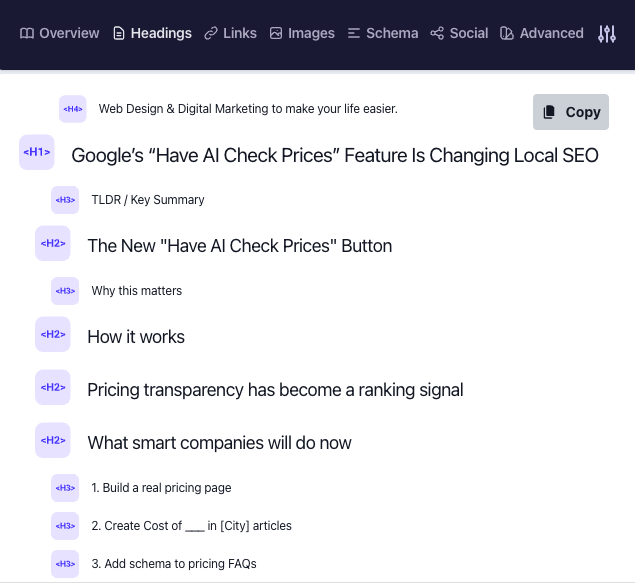
- Clear H2 and H3 hierarchy
- Standalone answer sections
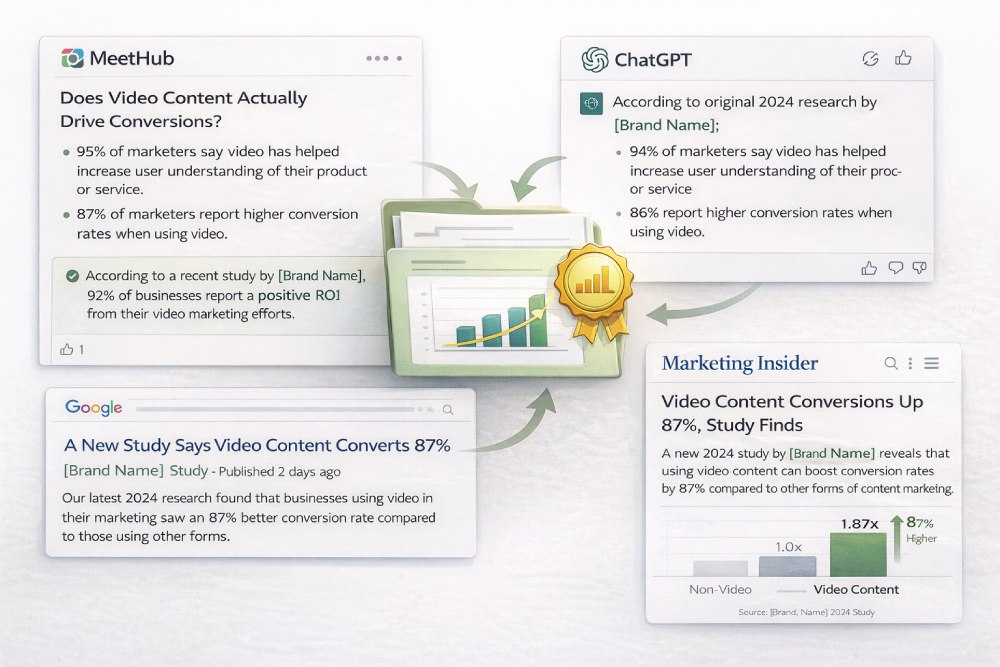
- First party data or original insight
- Specific statistics with sources
AI needs answers it can lift cleanly.
Not paragraphs buried in storytelling.
According to Semrush, content with concrete statistics gets referenced significantly more than generic advice.
That tracks with what we see in practice.
If a paragraph cannot stand alone as an answer, AI skips it.
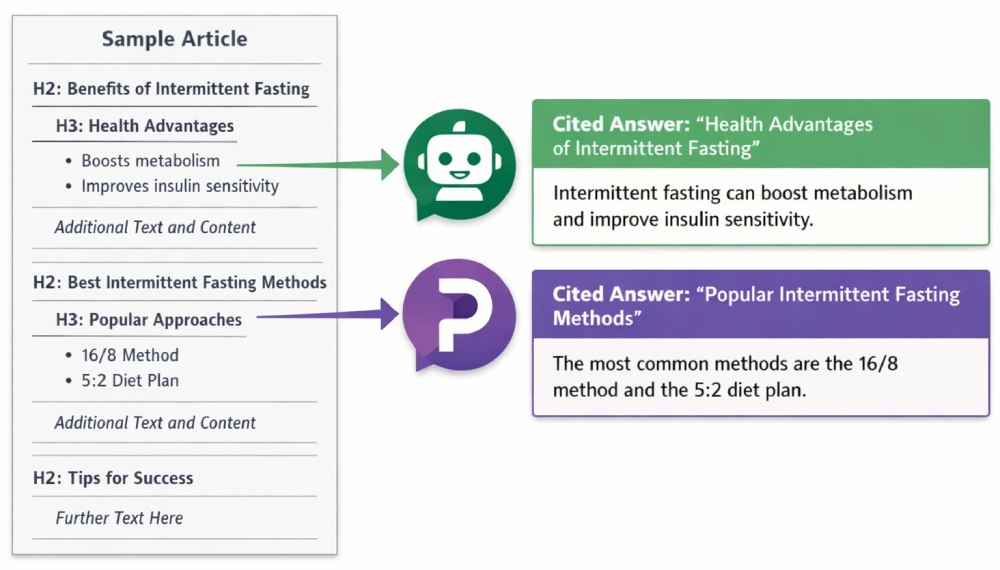
Best Advice: I love using the Detailed Chrome Extension for this where you can see the H1-H6 Hierchy for any blog or article and copy them in 1-click to analyze them:
2. Embed Commerce Directly in the Content
The old model was simple.
Write a blog post >> Hope they scroll >> Add a CTA at the bottom
That model is dead.
When AI filters informational traffic, every visitor who does land is more valuable. You cannot waste them.
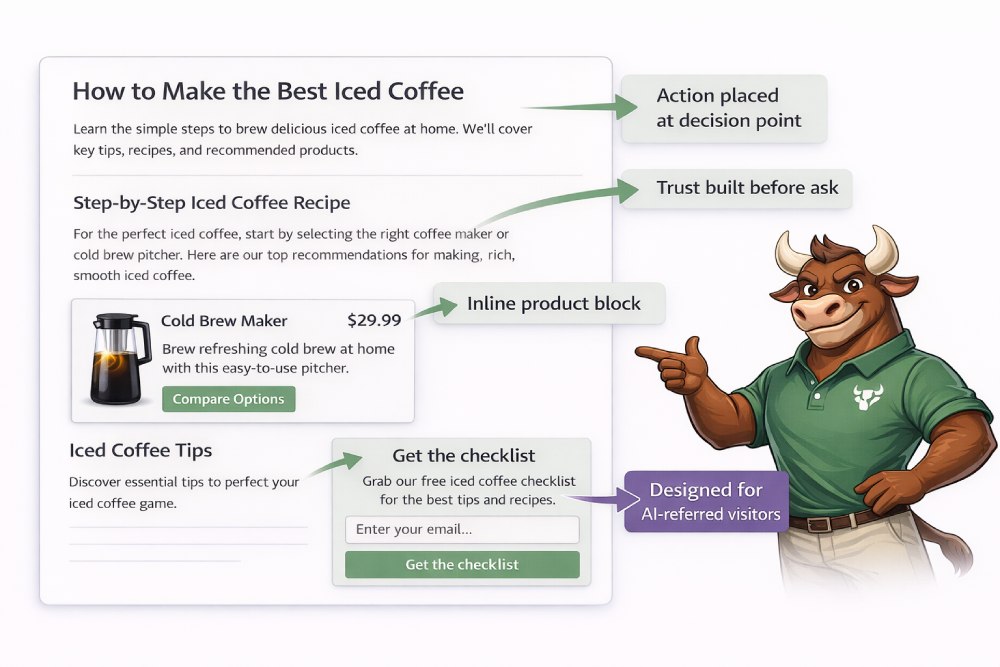
Instead, embed action naturally:
- Product recommendations inline
- Lead capture forms mid article
- Comparison tables with direct next steps
Do not force navigation.
Reduce friction.
If the reader trusts the answer, the action should be right there.
3. Map Content to Psychographic Personas
Demographics are surface level.
AI personalization goes deeper.
Most marketers still target things like:
- Women 30 to 40
- Homeowners
- Boston area
AI does not think that way.
It thinks in intent and motivation.
Segment content by:
- Buying motivation
- Research depth
- Content consumption behavior
Examples that actually work:
- Peer influenced buyers vs skeptics
- DIY learners vs fast decision makers
- Video first users vs long form readers
Two people can search the same question for completely different reasons.
Your content needs to meet both.
4. Publish Topic Clusters, Not Random Articles
AI platforms reward topical authority.
That means depth, not volume.
The structure looks like this:
- One pillar page that fully covers the core topic
- Five to ten supporting articles on subtopics
- Internal links that connect the full story
This part is not new.
Here is the part most people miss.
Write for conversational questions.
People ask AI things like:
- What is the best way to handle this
- How does this compare to that
- What should I do first
They do not search keyword strings anymore.
Write like you are answering a real person. Because you are.

5. Leverage Seasonality on Purpose
Every business has seasonality.
Most ignore it.
Track three things:
- When demand spikes
- Which content performs best by quarter
- When Google Discover picks up similar pages
Then publish or update content two to three weeks before the spike.
That timing matters.
It gives you:
- Freshness signals when demand rises
- Discover visibility if timing hits
- Ranking momentum before competitors react
SEO rewards preparation. Not reaction.

6. Build Authority Assets AI Cannot Ignore
Generic content loses to AI summaries every time.
Original data does not.
AI platforms prefer sources that add something new.
- That means:
- Surveys
- Proprietary datasets
- Internal benchmarks
- Real performance numbers
When you publish original research:
- AI references it repeatedly
- Journalists cite it for years
- Your brand becomes the source
This is how you escape the content hamster wheel.
One strong dataset can outperform a hundred blog posts.
The Real Shift in 2026 SEO
This is not about beating Google.
It is about being useful everywhere answers come from.
SEO in 2026 is about:
- Being cited
- Being trusted
- Being embedded in decisions
Traffic is a byproduct.
Authority is the asset.
If you structure content for AI, monetize inside the experience, and publish insight no model can recreate, you win.
Everything else is noise.