ChatGPT is officially moving toward advertising.
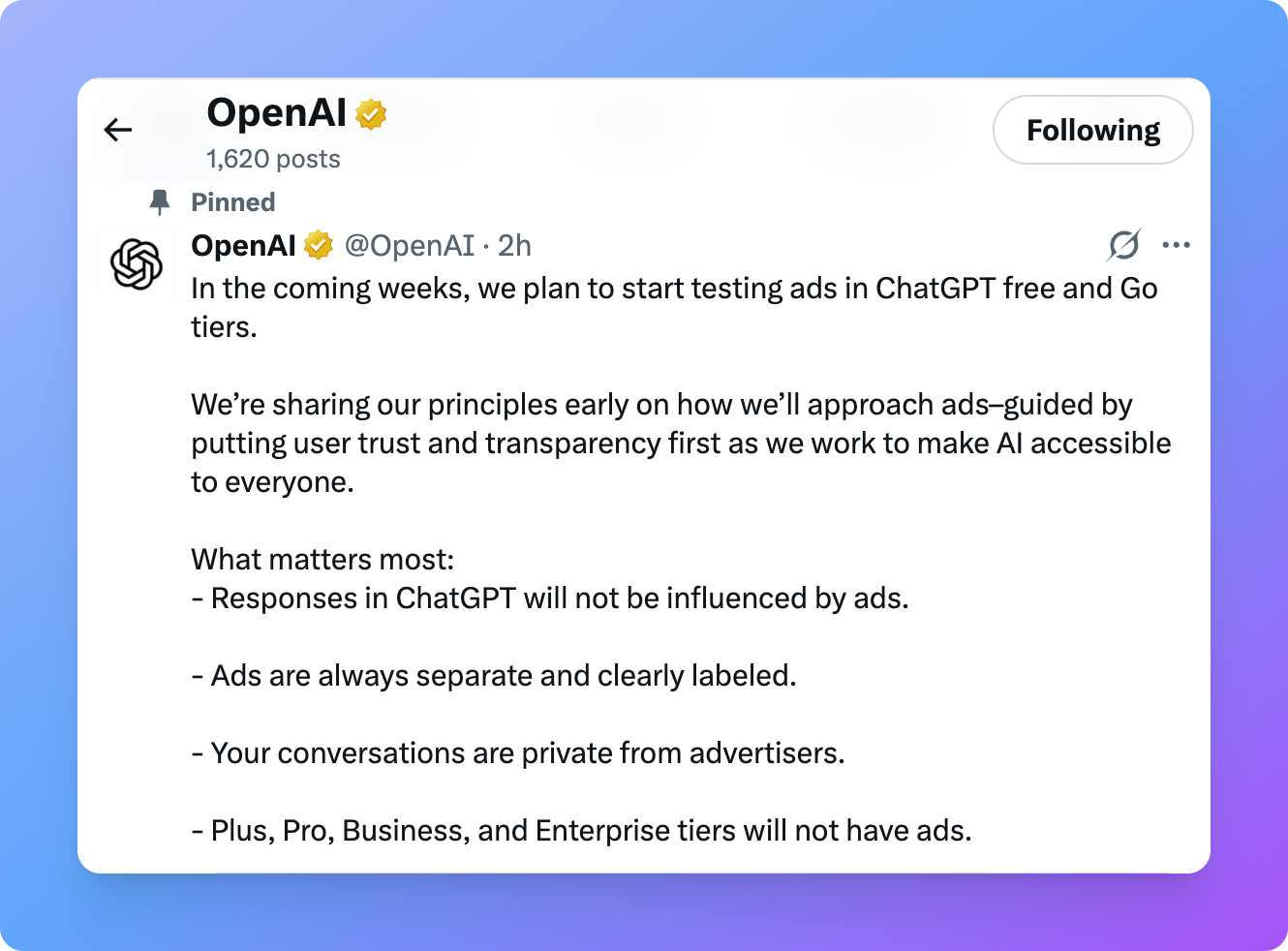
OpenAI has confirmed that ads will begin testing soon for logged-in adults in the U.S. on the Free and Go tiers. This is not a rumor or speculation. It’s a platform shift.
And when a new advertising platform opens up, the same thing almost always happens.
- Early attention is cheap.
- Competition is low.
- The rules are still being written.
That window never stays open for long.
TLDR: What this means for advertisers
- ChatGPT Ads are coming to Free and Go tiers
- Ads will be clearly labeled and separate from AI answers
- Responses are not influenced by advertising
- Early ad platforms are usually underpriced\
- Brands that prepare early tend to win cheaper traffic
- Once competition increases, costs rise quickly
We’re already helping brands prepare for how ChatGPT Ads will work and how to approach them the right way.
What are ChatGPT Ads?
ChatGPT Ads are sponsored placements that appear alongside AI responses when relevant to the conversation.
According to OpenAI:
- Ads do not influence the answers ChatGPT provides
- Ads are always clearly labeled
- Conversations remain private from advertisers
- Ads will not appear in sensitive or regulated topics
- Pro, Business, and Enterprise plans will remain ad-free
This is not ChatGPT turning into a traditional ad platform. It’s a controlled rollout designed to preserve trust while expanding access.
That distinction matters.
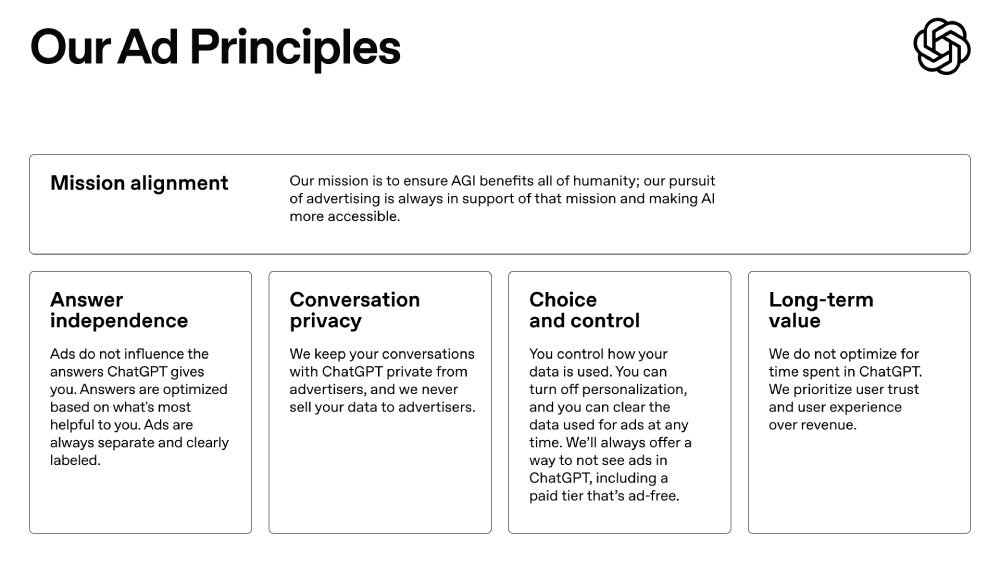
Here's the "Our Ad Principals" document from OpenAI:
Where ChatGPT Ads will appear
OpenAI has been explicit about the initial format.
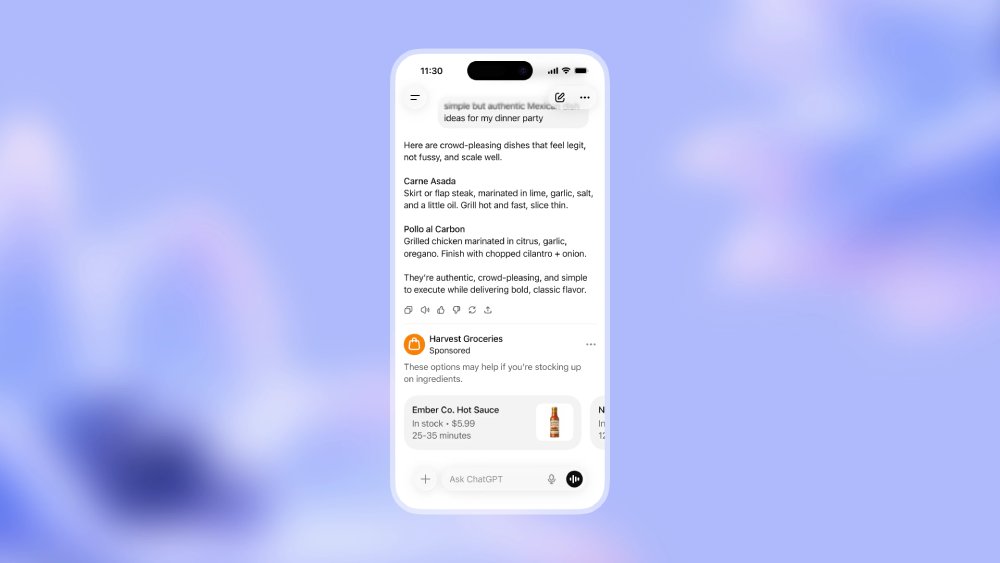
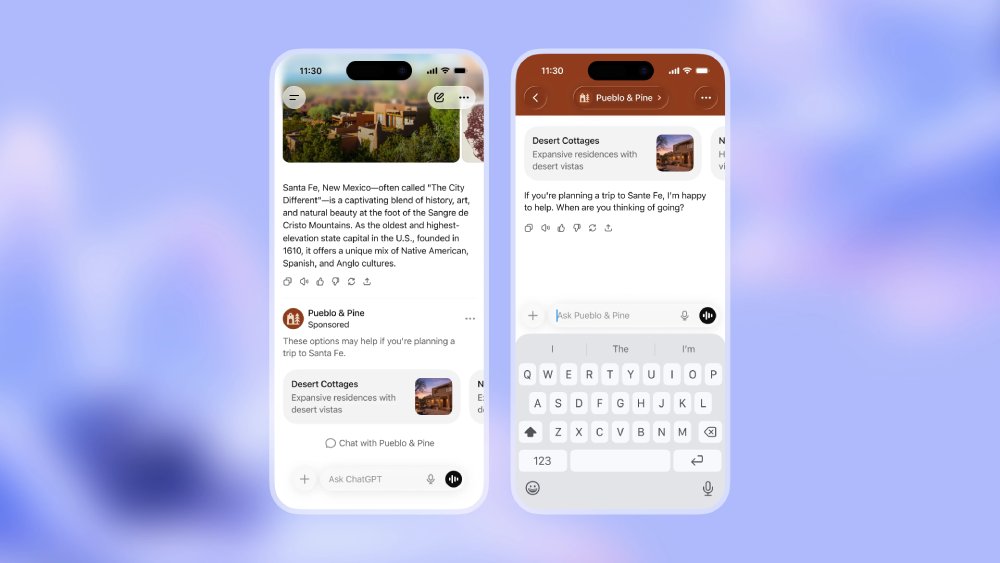
Ads will appear at the bottom of ChatGPT responses when a sponsored product or service is relevant to the current conversation. They will be visually separated from the organic answer and clearly labeled as ads.
This placement is intentional.
It captures users after they’ve already received value and are closer to a decision.
Why ChatGPT Ads are different from Google and Meta
Google Ads are driven by keywords and competition.
Meta Ads are driven by interests, behavior, and interruption.
ChatGPT Ads operate differently.
They are:
- Intent driven through conversation
- Contextual instead of keyword based
- Shown after value is delivered, not before
- Designed to support decision making, not scrolling
Instead of guessing intent, ChatGPT already understands it.
That changes how ads are evaluated, clicked, and trusted.
Why early ChatGPT Ads will likely be underpriced
This pattern is familiar.
- Facebook Ads were cheap at launch.
- Instagram Ads were ignored early.
- TikTok Ads were dismissed until costs exploded.
The reason is simple.
At the beginning:
- Few advertisers understand the platform
- There are no established playbooks
- Competition is limited
- Algorithms need data
Early advertisers benefit from inefficiency.
Once agencies, tools, and templates flood in, that inefficiency disappears. Costs rise. Margins shrink.
ChatGPT Ads are at the very start of that cycle.
What types of businesses will benefit most from ChatGPT Ads?
Not every business will be a fit. The strongest candidates are clear:
- Service businesses: High-intent research moments matter. Home services, professional services, and local providers benefit when users are actively seeking solutions.
- Ecommerce brands: Products that require explanation, comparison, or confidence building perform better in conversational environments.
- B2B companies: Decision makers researching software, services, or vendors are already using ChatGPT as part of their buying process.
- Emerging brands: Smaller brands can compete on clarity and relevance instead of budget size.
ChatGPT Ads reduce the advantage of scale and reward usefulness.
What businesses should be doing right now
You don’t need to run ads yet. But waiting without preparation is a mistake.
The brands that win early usually focus on fundamentals first.
That includes:
- Clarifying your core offer
- Tightening landing pages
- Removing friction from conversion paths
- Simplifying messaging
- Preparing ad copy that sounds human, not promotional
ChatGPT Ads will not reward vague marketing language.
They will reward clarity.
If your offer can’t be explained simply, it won’t convert here.
Can agencies manage ChatGPT Ads?
Yes. But not all agencies will succeed early.
This is not just another ad toggle.
Managing ChatGPT Ads will require:
- Understanding conversational intent
- Writing ads that feel natural
- Aligning ads with real user questions
- Knowing when not to advertise
Agencies built on automation and volume will struggle at first.
Teams that understand strategy, messaging, and user psychology will adapt faster.
How we’re helping brands prepare for ChatGPT Ads
We’re not pushing ads that don’t exist yet.
We’re helping brands prepare so they’re ready when the platform opens.
That includes:
- Evaluating whether ChatGPT Ads are a fit
- Preparing landing pages for conversational traffic
- Aligning offers with real intent
- Planning early testing strategies
- Avoiding costly mistakes during rollout
Preparation matters more than speed at the beginning.
Final thoughts
ChatGPT Ads are not live yet. That’s exactly why this matters.
The biggest opportunities in advertising don’t appear when everyone is comfortable. They appear quietly, before the playbooks exist, while most brands wait.
This is one of those moments.
If you want help thinking through whether ChatGPT Ads make sense for your business and how to prepare for them, we’re happy to talk.
No hype. Just strategy.
Let us know if you want help getting started with ChatGPT Ads!