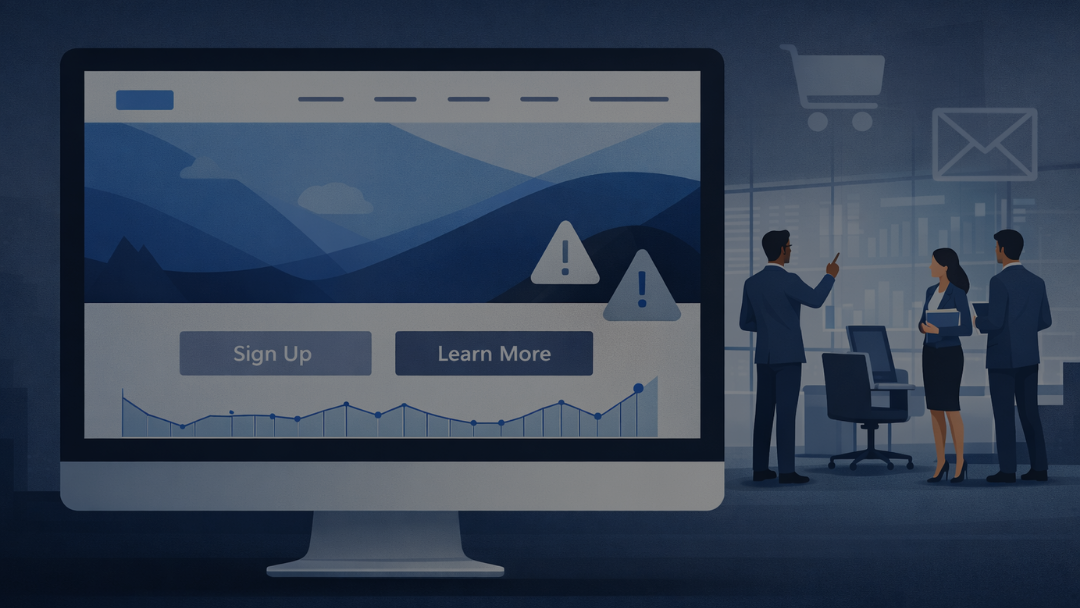
Website credibility plays a major role in how users and search engines judge your brand. A credible website builds trust, keeps people engaged, and increases conversions. If your site looks unreliable or outdated, most users will leave before taking action.
Key Summary
- Website credibility affects trust, rankings, and conversions.
- Design, content, security, and technical performance all matter.
- Search engines and users look for many of the same trust signals.
- Small credibility issues can quietly hurt leads and revenue.
What website credibility means
Website credibility is how trustworthy and legitimate a website appears to users and search engines. It answers one basic question fast: can I trust this business?
Credibility is not about looking fancy. It is about clarity, accuracy, security, and consistency. When visitors feel confident in your site, they stay longer, explore more pages, and are more likely to convert.
From Google’s perspective, credible websites are safer to rank. Google has stated that trust and expertise play a role in how content is evaluated, especially for business and service websites.
Why website credibility matters for SEO and conversions
Website credibility directly impacts how your site performs. According to Stanford research, 75% of users judge a company’s credibility based on its website design alone.
Search engines look at user behavior as well. Sites with low trust often see higher bounce rates and lower engagement. These signals can limit ranking potential even if the content is solid.
Credibility also affects conversions. A study by Sweor found that 88% of users are less likely to return to a website after a bad experience. Trust gaps quietly cost you leads.

What determines a website’s credibility
Several factors work together to establish trust. No single element fixes credibility on its own. Strong websites layer multiple signals that reinforce each other.
Clear and professional website design
Design is the first trust filter. Users decide within seconds whether a site feels legitimate.
Clean layouts, readable fonts, and consistent branding help visitors understand where they are and what you do. Confusing navigation or outdated visuals raise red flags.
This is why strong web design is not about trends. It is about clarity, usability, and trust.
Accurate and helpful content
Content establishes authority. If your pages answer real questions clearly, users trust you more.
Credible content explains concepts in plain language, avoids exaggeration, and backs up claims with data. Thin or vague copy does the opposite.
Google’s Helpful Content guidelines reinforce this idea. Content written for people, not algorithms, performs better over time.
Visible trust signals and proof
Users look for confirmation before they believe what you say.
Examples include client logos, testimonials, case studies, certifications, and real team information. These details show that a real business stands behind the site.
According to BrightLocal, 87% of consumers read online reviews for local businesses, and trust increases when proof is easy to find.
Security and privacy protection
Security is non-negotiable. HTTPS is now a baseline trust requirement.
Websites without SSL certificates often trigger browser warnings. These warnings immediately damage credibility and scare users away.
Clear privacy policies and secure forms show users their data is handled responsibly.
Strong technical performance
Slow or broken websites feel unreliable.
Google data shows that when page load time increases from one second to three seconds, the probability of bounce increases by 32%.
Performance issues quietly erode trust even if the design looks good.
Search visibility and authority signals
Users trust brands they recognize. Ranking on the first page builds perceived legitimacy.
Backlinks from reputable sites, consistent business information, and a strong domain history all contribute to credibility.
This is where SEO Services help reinforce long term trust and visibility.
How website credibility affects your business long term
Credibility compounds over time. Trusted websites earn more links, rank more consistently, and convert at higher rates.
Low credibility sites often struggle with paid ads, organic traffic, and lead quality. Even strong offers fall flat if the site feels untrustworthy.
Credibility is not a one time fix. It requires ongoing attention to content, performance, and user experience.
When to audit your website’s credibility
If traffic is flat, conversions are low, or users drop off quickly, credibility may be the issue.
Website audits often reveal small trust gaps that add up. Outdated content, missing proof, or technical issues are common problems.
If you are unsure where your site stands, it may be time to step back and evaluate it objectively.
Torro Media helps businesses identify and fix credibility issues that limit growth.
If you want expert input on your site’s trust signals, request a quote to start the conversation.
Have questions or want a second opinion? Contact us and we will take a look.
Frequently Asked Questions
What is website credibility?
Website credibility is how trustworthy and legitimate a website appears to users and search engines based on design, content, security, and performance.
What determines a website’s credibility?
What determines a website’s credibility includes design quality, accurate content, trust signals, site security, technical performance, and search visibility.
Does website credibility affect SEO?
Yes. Website credibility affects SEO by influencing engagement metrics, backlinks, and how search engines evaluate trust and authority.
How can I improve website credibility?
You can improve website credibility by updating design, publishing helpful content, adding proof, securing your site, and improving performance.
How long does it take to build website credibility?
Website credibility builds over time. Some improvements are immediate, but long term trust grows through consistent quality and performance.


.png)