If you’re evaluating a marketing agency right now, you’re probably hearing a lot about AI search, AIO marketing, and whether SEO still matters.
The short answer is simple.
You should invest in both. But most companies should build strong SEO first and layer AIO on top.
AI discovery is growing quickly, but it still relies heavily on the web content and authority signals that SEO creates.
Understanding how the two work together is the key to building visibility today.
Key Summary
- SEO helps your business rank in Google and capture traditional search demand.
- AIO marketing helps your brand appear in answers generated by AI tools.
- The strongest strategy today is not choosing between them. It is combining them.
- SEO builds the authority and content foundation.
- AIO helps that content become a source AI systems reference.
- Companies that build both layers of visibility are showing up earlier in the research process and staying visible through the entire buying journey.
The Problem: Discovery No Longer Starts in Google
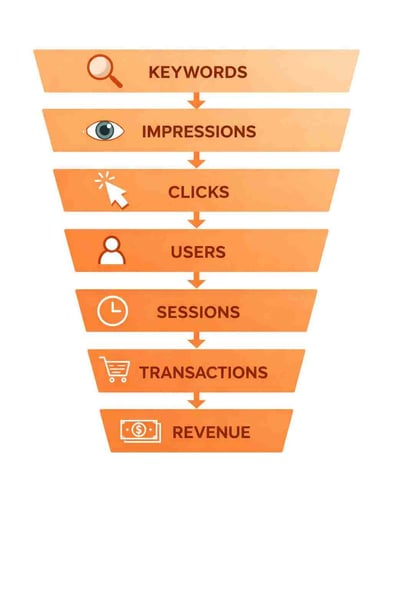
For years, organic growth followed a predictable model.
A business identified important keywords, created optimized content, built authority, and gradually earned higher rankings in search engines.
When that worked, the funnel looked like this:
Keywords → Impressions → Clicks → Users → Sessions → Transactions → Revenue
But that model assumes one thing.
That discovery always starts in search.
Today, many buyers begin somewhere else.
Instead of opening Google, they ask a question in an AI assistant like ChatGPT, Perplexity AI, Claude, or Google Gemini.
For example:
“What’s the best SEO agency for a growing company?”
The AI response may include:
- A direct answer
- Brand recommendations
- Links or citations to supporting sources
If your brand is not mentioned in that response, you may never enter the evaluation process.
Many users will simply trust the recommendation and move forward without performing another search.
That’s why companies are starting to talk about AIO vs SEO.
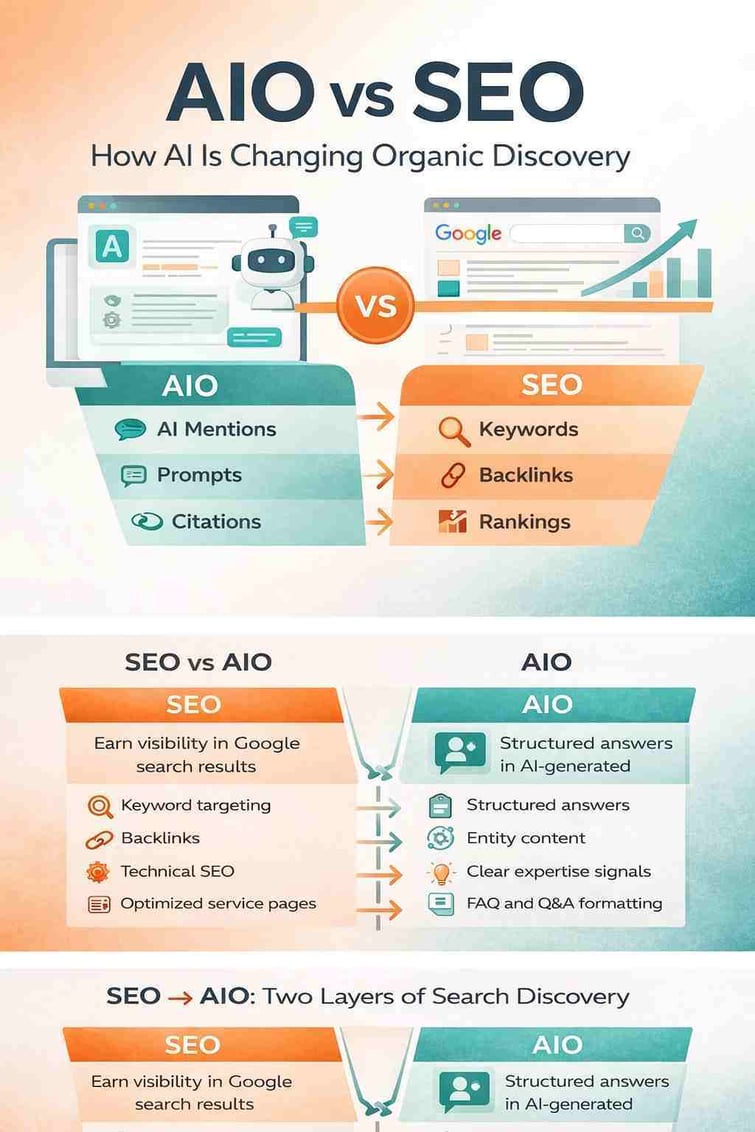
AIO vs SEO: The Simple Explanation
SEO (Search Engine Optimization)
Focus: ranking in Google and traditional search engines.
Goal: appear when someone searches for terms like “best SEO agency.”
Typical SEO activities include:
- Keyword targeting
- Backlinks
- Technical SEO improvements
- Optimized service pages
- Content clusters and internal linking
SEO is about earning visibility in search results.
AIO Marketing (AI Optimization)
Focus: appearing in AI tools and AI-generated answers.
Goal: become a source AI systems reference when they generate responses.
Typical AIO tactics include:
- Structured answers to questions
- Clear expertise signals
- Entity-based content
- FAQ and Q&A formatting
- Authoritative topic coverage
AIO is about being referenced in AI-generated responses.
The Reality in 2026: AIO vs SEO
It is not really SEO vs AIO.
The relationship is better understood like this:
SEO → AIO
SEO creates the authority and content foundation.
AIO builds on that foundation by making your content easier for AI systems to reference and cite.
Think of it this way:
Strategy | What It Does
SEO | Gets your site ranked in search engines
AIO | Gets your content cited in AI answers
Both | Build visibility across the entire discovery process
If a company skips SEO and focuses only on AI visibility, it will struggle because AI systems still rely heavily on web content, authority signals, and trusted sources.
Why Search Behavior is Changing
Search behavior is changing.
Traditional searches looked like this:
“best seo agency”
AI queries sound very different.
“How do I choose the right SEO agency for my business?”
People don’t speak in keywords.
They speak in conversations.
AI assistants make it easier to ask complex questions and receive summarized answers instantly.
That conversational discovery layer is expanding quickly.
AIO vs SEO: Two Layers of Discovery
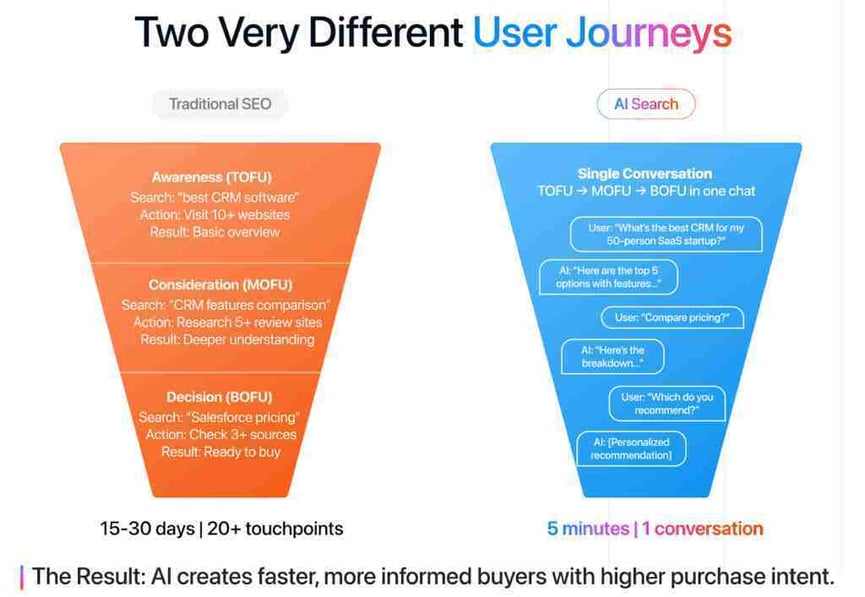
The graphic above shows how discovery now works.
There is a conversational AI layer that happens before traditional search.
In that layer, discovery moves through three stages.
Prompts
A user asks an AI system a question.
Mentions
The AI recommends brands or companies.
Citations
The AI references specific content as a source.
Only after this stage do many users continue into traditional search.
That is where the traditional SEO funnel begins.
Understanding both layers is becoming critical for companies that want to remain visible online.
The Best Strategy Right Now
For most companies, the most effective approach is to build SEO foundations first and then optimize for AI visibility.
Step 1: Build Strong SEO Foundations
This includes the elements that have always mattered in organic growth.
- Technical SEO
- Topical authority
- Backlinks
- Topic clusters
- Internal linking
These signals create the trust and authority AI systems rely on when selecting sources.
Step 2: Optimize Content for AI
Once that foundation exists, content can be structured so AI systems can easily extract answers.
This includes:
- FAQ sections and Q&A content\
- Clear answer paragraphs
- Strong entity signals
- Original insights or data
- Well-structured articles
Much of what performs well for AI visibility is simply well-structured, authoritative SEO content.
How AI Systems Decide What to Cite
AI systems do not rank pages the same way search engines do.
Instead, they synthesize information from trusted sources.
Across tools like ChatGPT, Perplexity, Claude, and Gemini, four signals consistently influence which content gets cited.
Topical Authority
AI models favor sources that demonstrate consistent expertise on a topic.
If someone asks an AI system how to evaluate an SEO agency, it looks for websites that discuss:
- SEO strategy
- Hiring an SEO agency
- SEO pricing
- Agency evaluation
- SEO performance
Not just one optimized page.
Sites that publish multiple related pieces with strong internal linking send a much stronger authority signal.
Clear Question and Answer Structure
AI systems extract answers from content.
Pages that perform well typically present information in a clean, structured format.
Example:
H2: What is AIO in marketing?
The first paragraph provides a clear answer within the first few sentences.
That structure allows AI models to easily identify and extract answer blocks.
Brand Authority and Mentions
AI models do not rely only on your website.
They evaluate how often your brand appears across the web.
Signals include:
- Industry citations
- Media mentions
- Backlinks
- Podcasts and interviews
- Guest articles and directories
When a brand consistently appears across trusted websites, AI systems begin associating that brand with specific topics.
Original Insights or Data
AI tools increasingly prioritize sources that contribute new information.
Examples include:
- Original research
- Industry surveys
- Case studies
- Proprietary frameworks
- Benchmark reports
Content that adds new knowledge to the internet is far more likely to be referenced than content that simply summarizes existing ideas.
The Big Shift
Traditional SEO rewarded signals like:
- Keyword targeting
- Backlinks
- Page optimization
AI visibility increasingly favors signals like:
- Topic authority instead of individual keywords
- Extractable answers instead of long explanations
- Brand mentions instead of only backlinks
- Original insights instead of generic blog content
SEO is not disappearing.
But discovery is expanding into two layers.
Search engines rank pages.
AI systems cite sources.
Companies that understand both systems are gaining a major advantage.
Why This Matters When Hiring a Marketing Agency
Most companies are still optimizing primarily for search rankings.
Very few are intentionally optimizing their content to become sources AI systems reference.
That gap is where a major opportunity exists.
Agencies that understand both SEO and AIO marketing can help businesses maintain visibility as discovery evolves.
How to Choose the Right SEO Agency in an AI-Driven Search Landscape
As AI changes how people discover businesses online, choosing the right SEO agency is becoming even more important.
Many agencies still focus almost entirely on traditional SEO metrics like rankings and traffic. While those things still matter, they no longer tell the full story of how visibility works online.
A modern SEO strategy should account for both discovery layers:
- Visibility in traditional search engines
• Visibility in AI-generated answers
That means the right partner should be able to explain not only how they approach keyword rankings, but also how they build topical authority, structured content, and brand signals that AI systems reference when generating responses.
If you’re currently evaluating agencies, it’s worth understanding what questions reveal whether an agency is thinking about search the right way.
You can explore this in more detail in our guide on how to choose the right SEO agency.
The article outlines the specific questions businesses should ask before hiring an SEO partner and how to determine whether an agency is focused on real business outcomes rather than just surface-level metrics.
How Torro Approaches SEO and AIO
At Torro Media, organic strategies are built around both discovery layers.
The goal is not simply to improve rankings.
It is to ensure your brand appears wherever buyers start researching a problem.
This includes developing authoritative content that AI systems can reference, building topical authority across competitive industries, structuring content so it performs well in both search results and AI responses, and connecting organic visibility to measurable business outcomes.
The objective is simple.
Ensure your brand shows up when potential customers begin asking questions. If you're evaluating SEO agencies or trying to understand how AI is changing organic discovery, our team can help you assess where your strategy stands today. Explore our SEO services or request a quote from the Torro team to see what a modern SEO and AIO strategy actually looks like in practice.
Frequently Asked Questions
What is AIO marketing?
AIO marketing refers to optimizing your brand’s visibility in AI-generated answers. When users ask questions in tools like ChatGPT, Perplexity, Claude, or Gemini, AIO marketing helps ensure your brand appears in those responses through mentions or citations.
How is AIO different from SEO?
SEO focuses on ranking webpages in search engines like Google. AIO marketing focuses on appearing as a source within AI-generated answers before users even perform a traditional search.
Should companies invest in SEO or AIO?
Most companies should invest in both. SEO creates the authority and content foundation, while AIO helps that content become visible in AI-generated answers.
Is AIO replacing SEO?
No. AIO is better understood as the next layer of SEO. AI systems still rely heavily on web content, authority signals, and trusted sources created through SEO.