The Google Search Bar is not going away… entirely. But the way we use and experience it is changing fast.
Key Summary
- The Google Search Bar is becoming more conversational, more visual, and more AI-powered.
- Users are moving away from short keyword searches and toward longer, more specific questions.
- Traditional rankings still matter, but they are no longer the full picture.
- Clicks are declining for many informational searches because users are getting answers directly in search results.
- SEO is not dead. Thin SEO is dead.
- The brands that win will be the ones with clear expertise, original proof, strong third-party validation, and content that helps real buyers make real decisions.
The Google Search Bar Is Not Disappearing. It Is Becoming Something Else.
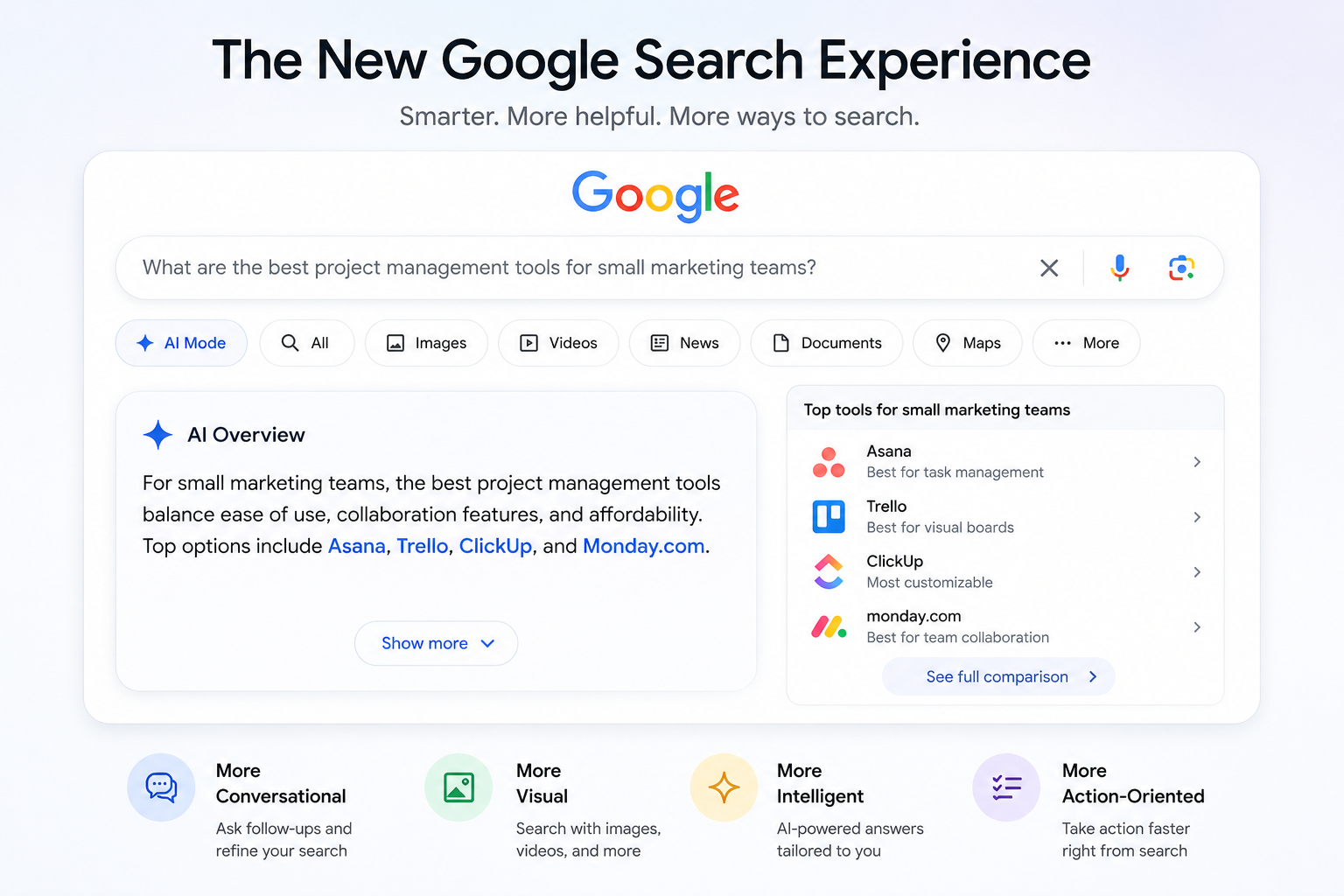
Google recently announced what it called the biggest upgrade to the Search box in more than 25 years. The old version of search was simple. You typed a keyword. Google returned a list of links. You clicked around until you found what you needed.
That experience is changing.
The new Google Search Bar is becoming more like a conversational AI assistant. Users will be able to ask longer questions, use full sentences, upload files, add images, include videos, and even bring Chrome tabs into the search experience.
This means search is no longer just about matching a keyword to a web page. It is about understanding context, intent, history, and the next best action.
So no, the Google Search Bar is not going away… exactly.
But the basic keyword-entry version of it is fading.
What Changed in Google Search?
Google Search is moving from a static search box to an AI-assisted answer and action engine.
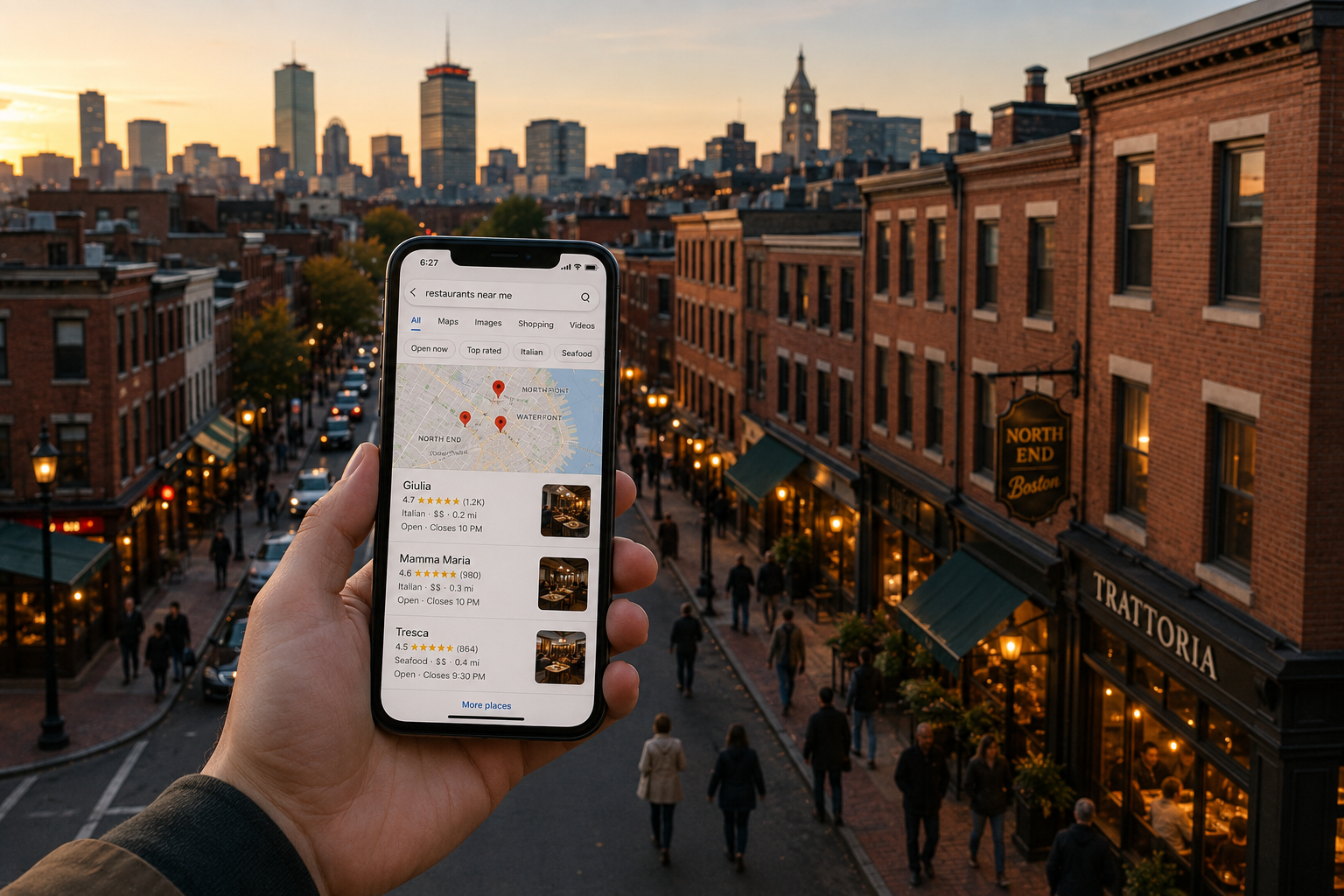
That may sound dramatic, but it is already happening. Users do not just search “best running shoes” anymore. They search, “What are the best running shoes for someone with high arches who runs on trails?
They do not just search for “self-storage near me.” They search, “What is the best self-storage facility that’s temperature controlled to protect artwork?”
That is a very different search behavior.
It is more specific. It is more personal. It sounds more like a conversation with a friend than a traditional keyword query.le is building the search experience around that behavior.
And Goog
Search Is Becoming More Conversational
Conversational search means users ask full questions instead of typing short keyword phrases.
This matters because the best answer is no longer the page that repeats the keyword the most. The best answer is the one that understands the full problem behind the question.
For SEO, that means content needs to answer layered questions. It needs to explain the what, the why, the how, and the “what should I do next?”
Search Is Becoming More Visual and Multi-Modal
Multi-modal search means users are not limited to text. They can use images, videos, documents, and browser context to strengthen a query.
That changes how Google understands need.
A user might upload a photo of a broken appliance, a screenshot of a software error, or a competitor comparison table. Google can use that added context to generate a more specific answer.
For businesses, this means your content ecosystem has to go beyond blog posts. Video, visuals, documentation, comparison pages, customer examples, and product data all matter more.
Search Is Becoming More Agentic
Agentic search means AI agents can help users gather information, compare options, monitor updates, and complete tasks over time.
This is one of the biggest shifts for SEO.
Your future buyer may not be the only one reviewing your website. Their AI agent may be reviewing it first.
That agent will not care about vague sales copy. It will look for clear data, exact pricing, technical compatibility, implementation timelines, reviews, case studies, documentation, and third-party proof.
How This Changes SEO
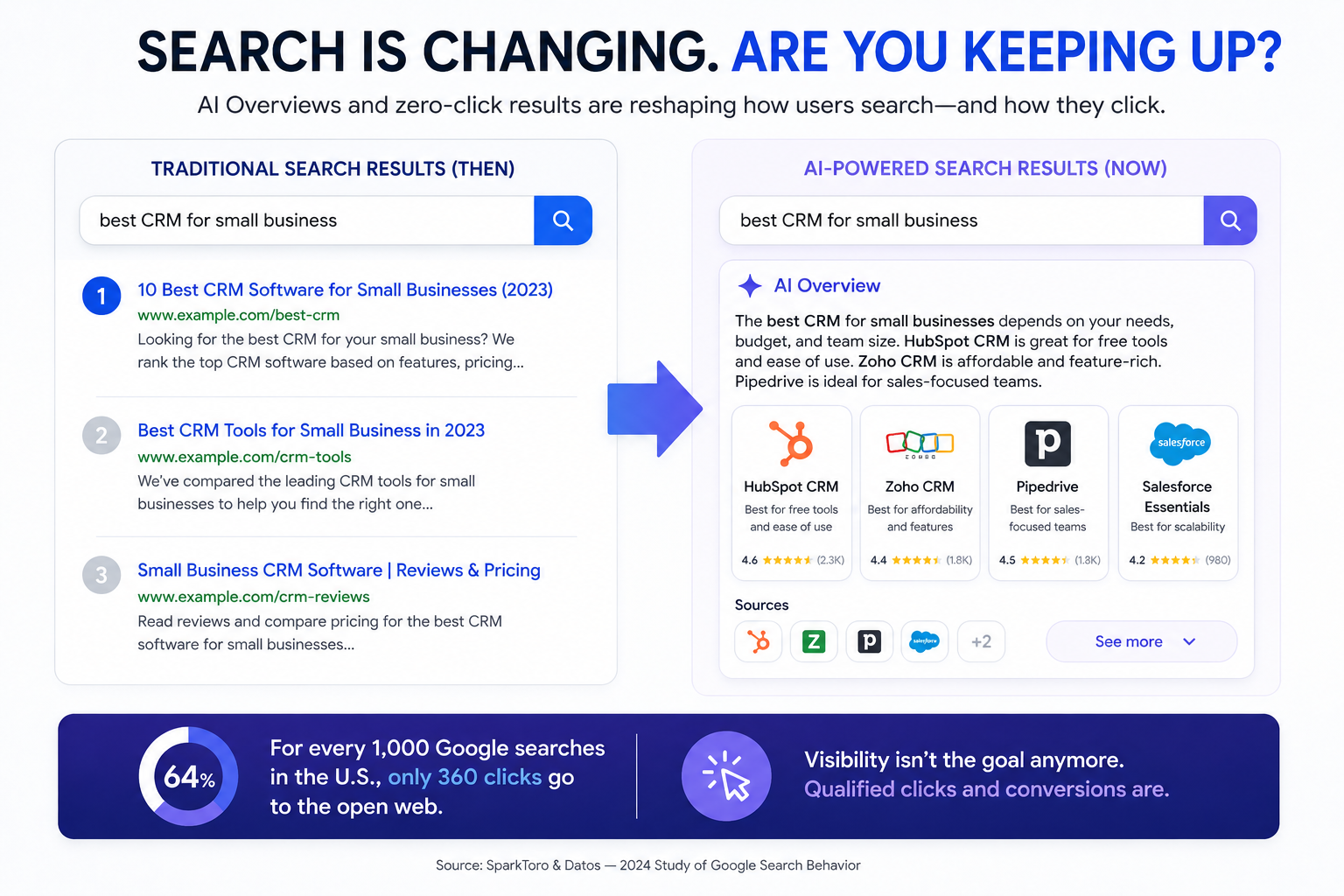
SEO is not going away. But the old way of doing SEO is losing power.
It used to be enough to find a keyword with high search volume and low difficulty, write a blog post, optimize the title tag, and try to rank on page one.
That is not enough anymore.
Today, winning in search means going deeper into the specific problems your customers are trying to solve. It means creating content clusters around real questions, not just isolated keywords.
At Torro Media, we see this shift every day. Generic informational content is getting easier for AI to summarize. But content built on firsthand experience, real examples, original data, and strong opinions still has value.
That is the difference.
Why Ranking Number One Is Not Enough Anymore
Traditional rank tracking is becoming less useful on its own.
A business may rank number one for a keyword and still get fewer clicks than expected. Why? Because AI Overviews, featured snippets, maps, product cards, Reddit threads, YouTube results, and other search features can push organic listings farther down the page.
Research from SparkToro and Datos found that for every 1,000 Google searches in the United States, only 360 clicks went to the open web. Pew Research also found that users were less likely to click traditional search results when an AI summary appeared.
That does not mean rankings are worthless.
It means rankings are incomplete.
You should not ask, “Are we ranking?” first.
Instead you should ask, “Is organic search creating qualified leads, sales opportunities, and revenue?”
The Biggest Misconception About AI SEO
The biggest misconception is that there is a separate AI optimization checklist that replaces SEO.
There is not.
Google has been clear that the AI layer still relies on many of the same fundamentals that have always mattered: relevance, trust, quality, authority, and helpfulness.
If content is thin, generic, or built only to chase a keyword, AI will not magically make it more valuable.
There is no shortcut that turns weak content into a trusted source.
The real shift is not from SEO to AI SEO. The shift is from shallow SEO to proof-based SEO.
What Businesses Should Do Instead
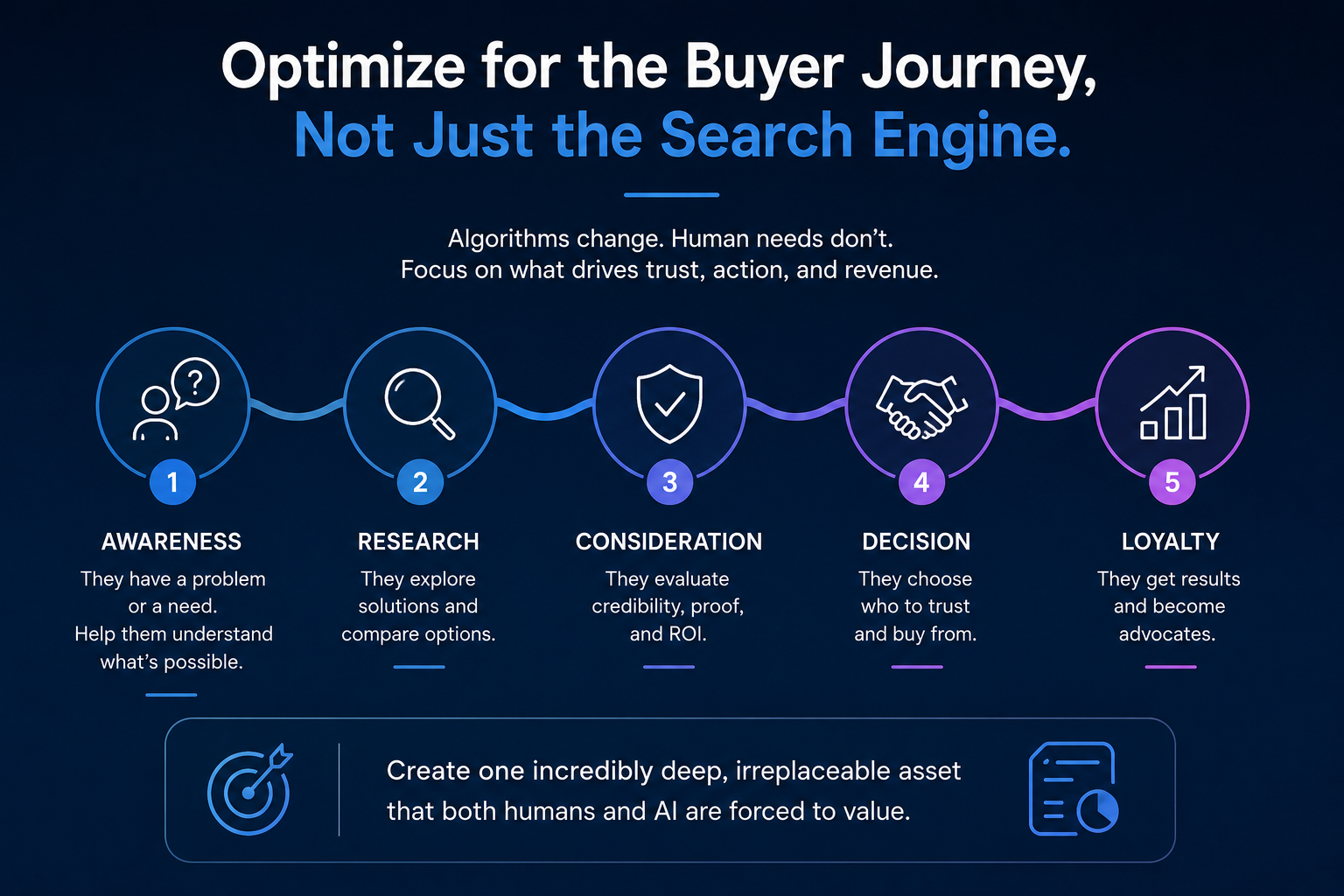
Businesses need to stop optimizing only for search engines and start optimizing for the full customer journey.
Algorithms change. Human needs do not.
A buyer still needs to trust you. They still need to understand what you do. They still need proof that you can solve their problem. They still need to defend the decision internally.
If that sounds familiar, our SEO Services are built around that exact idea: clear strategy, measurable work, and no mystery box reporting.
Build Content Around Real Buyer Questions
Start with the questions your customers actually ask before they buy.
Ask better questions.
What does a skeptical buyer need to know before hiring you for your service or purchasing your product?
What proof would make them trust the recommendation?
What would they need to show their CEO, partner, or board?
That is where strong content starts.
Create Proof, Not Just Posts
The future of content is not just blog volume. It is proof.
That proof can come from case studies, customer interviews, original research, comparison pages, interactive tools, templates, benchmarks, video breakdowns, and detailed service pages.
One deep, useful asset can be more valuable than ten generic blog posts.
This is where many agencies get it wrong. They still treat SEO like a publishing quota.
But the better question is, “Would a human or AI agent have a reason to trust this?”
Make Bottom-of-Funnel Content Machine-Readable
Bottom-of-funnel SEO content needs to be clear enough for both humans and AI agents to evaluate.
That means replacing vague claims with specific information.
Say what the service includes. Explain who it is for. Show timelines. Show pricing structure when possible. Explain limitations. Include examples. Answer objections directly.
AI agents do not need your landing page to sound clever.
They need it to be useful.
Off-Website SEO Matters More Than Ever
SEO does not start and end on your website.
Google’s AI systems and other AI platforms build an understanding of your brand from the broader internet. That includes reviews, Reddit, YouTube, LinkedIn, directories, industry mentions, podcasts, case studies, and third-party discussions.
If your website says you are great, but the rest of the internet is silent, that is a weak trust signal.
If your customers are talking about you, reviewing you, quoting you, citing you, and recommending you across multiple platforms, that is much stronger.
This is why SEO, digital PR, community management, social media, content, and brand strategy are becoming more connected.
If your current agency is only updating title tags and publishing thin blogs, they may not have their pulse on where search is going. Our Digital Services help connect those channels so your brand is easier for both people and AI systems to understand.
What SEO Metrics Matter Now?
The best SEO metrics are shifting from visibility metrics to business metrics.
Rankings still matter. Traffic still matters. But they are not enough on their own.
The metrics that matter most now are organic conversions, qualified leads, sales, signups, revenue, referral traffic from AI platforms, and ecosystem share of voice.
Ecosystem share of voice means how often your brand is recommended, cited, listed, or discussed across Google, ChatGPT, Claude, Perplexity, Reddit, YouTube, reviews, and other trusted sources.
That is harder to measure than a keyword ranking.
But it is much closer to how buyers actually make decisions now.
When to Get Help
If your organic traffic is down, your rankings look fine, and your leads are not improving, you probably do not need more random blog posts.
You need a clearer strategy.
You need to know which content is helping, which content is wasting budget, and where your brand is missing proof across the buyer journey.
If you want a second opinion on whether your current SEO strategy is built for where search is going, you can Request a Quote.
If you are already working with an agency and something feels off, that is worth paying attention to. You do not need to panic. But you should ask harder questions.
You can also Contact us if you want help reviewing what is working, what is not, and what should change.
The Bottom Line: SEO Is Becoming More Human, Not Less
The Google Search Bar is not going away.
It is becoming more conversational, more contextual, and more action-oriented.
That may feel like a threat if your SEO strategy depends on shallow content and keyword tricks.
But it is good news if your business has real expertise, real customers, real proof, and a clear point of view.
The future of SEO belongs to brands that are useful before the sale, trustworthy during evaluation, and easy to validate across the internet.
In other words, stop chasing the algorithm.
Start serving the buyer.
Frequently Asked Questions
Is the Google Search Bar going away?
No, the Google Search Bar is not going away. The Google Search Bar is changing from a basic keyword search tool into a more conversational, AI-powered search experience.
How will the new Google Search Bar affect SEO?
The new Google Search Bar will affect SEO by making search more conversational, contextual, and answer-focused. Businesses will need deeper content, stronger proof, better third-party validation, and clearer bottom-of-funnel information.
Will AI search replace traditional SEO?
AI search will not replace traditional SEO. AI search will make weak SEO less effective. The core SEO fundamentals still matter, including helpful content, trust, authority, technical performance, and clear answers to real customer questions.
Are keyword rankings still important?
Keyword rankings are still useful, but they are no longer enough. A number one ranking may not create clicks if AI summaries or other search features answer the query first. Organic conversions, revenue, and brand visibility across platforms matter more.
What should businesses do to prepare for AI search?
Businesses should prepare for AI search by creating original, specific, proof-based content. They should also strengthen reviews, case studies, video content, social proof, third-party mentions, and bottom-of-funnel pages that clearly explain why a buyer should trust them.