
Marketing is changing fast.
There are more channels, more tools, more data, and more content than ever before.
And the problem is simple. The amount of work keeps growing, but teams do not.
That is where a marketing engineer comes in.
TL;DR: What Is a Marketing Engineer?
- A marketing engineer builds systems that make marketing faster and more efficient.
- They combine marketing strategy and technical skills like automation, data, and AI.
- They replace manual work with automated workflows.
- They help businesses generate more leads without hiring more people.
- They are quickly becoming one of the most valuable roles in modern marketing.

What Is a Marketing Engineer?
A marketing engineer is a hybrid professional who sits between marketing and engineering.
They do not just run campaigns. They build the systems that help campaigns run better, faster, and with less manual work.
Here is the easiest way to think about it:
A marketer asks: How do we get more leads?
A marketing engineer asks: How do we build a system that helps us get more leads over and over again?
That is the difference.
A marketing engineer focuses on how marketing works behind the scenes. They look at the tools, data, workflows, automations, and tracking that make marketing possible. Then they improve those systems so the business can move faster.
This often includes:
- Automations
- Data pipelines
- CRM integrations
- Tracking systems
- AI workflows
- Reporting systems
Instead of doing the same work manually every week, they build systems that can handle much of that work for the team.
Why Marketing Engineering Exists
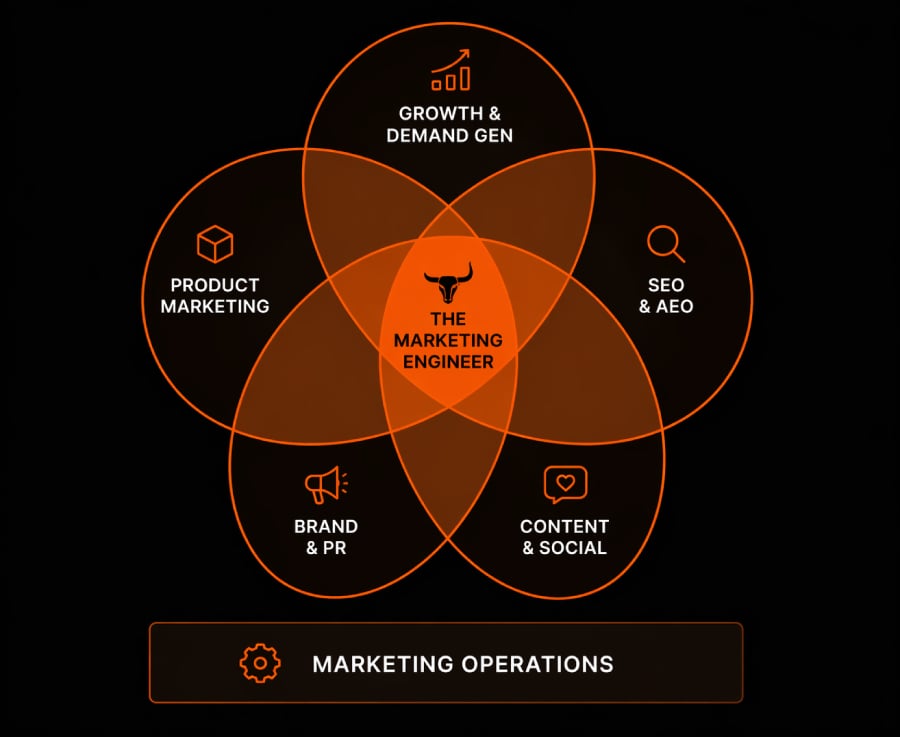
Marketing keeps getting bigger.
Nothing really gets replaced. It just gets added.
- SEO did not replace ads
- Social media did not replace SEO
- Video did not replace written content
- AI search is not replacing everything either
It is all stacking.
That means modern businesses are being told they need to do all of this at once:
- SEO
- Google Ads
- Social media
- Email marketing
- Landing pages
- Review generation
- AI search visibility
- Content creation
- Tracking and reporting
That is a lot of moving parts.
Most businesses try to solve the problem by hiring more people. But headcount does not scale the same way systems do.
That is why marketing engineering matters. It is a way to grow marketing output without growing manual work at the same pace.
What Does a Marketing Engineer Do?
A marketing engineer turns manual marketing work into systems.
That is the job in plain English.
But there are a few major parts of that role.
Build Systems and Automations
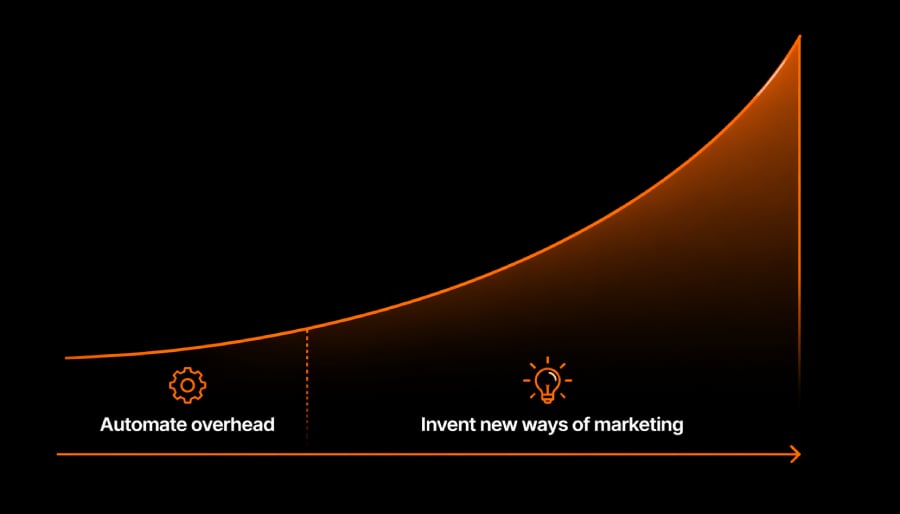
A marketing engineer looks at repetitive work and asks a simple question: why is this still being done manually?
Then they build something better.
Examples include:
- Automatically pulling SEO data from Google Search Console
- Sending lead data from forms into a CRM
- Building follow-up workflows for leads
- Creating automated reports and dashboards
- Syncing data between marketing tools
Instead of the team doing the same steps every week, the system does it.
Use Data to Improve Marketing Decisions
Marketing engineers do not rely on guesswork.
They build systems that help teams understand what is actually happening.
That includes tracking things like:
- Traffic
- Leads
- Conversion rate
- Cost per lead
- Return on ad spend
- Keyword performance
This helps answer important questions like:
- Which keywords are driving real leads?
- Which landing pages are underperforming?
- Which campaigns are wasting money?
- Where are leads dropping off in the funnel?
Connect Tools and Platforms
Most businesses use several tools at once. Their website, CRM, ad platforms, email software, analytics tools, call tracking, and reporting platforms often live in separate places.
A marketing engineer connects them.
They make sure the tools talk to each other so the business has one cleaner system instead of a bunch of disconnected parts.
Use AI in a More Practical Way
A lot of teams use AI at a surface level. They use it to write rough drafts or brainstorm ideas.
A marketing engineer goes deeper than that.
They build workflows where AI can support actual marketing operations.
That can include:
- Keyword research support
- Content outlines
- Competitor analysis
- Landing page recommendations
- Ad copy testing support
- Weekly content refreshes
The goal is not to create more junk faster. The goal is to use AI inside a controlled system that improves quality, speed, and output.
Remove Repetitive Manual Work
This is one of the biggest wins.
Most businesses have hidden marketing waste in places like:
- Copying data from one tool to another
- Checking rankings by hand
- Building the same reports over and over
- Writing similar pages from scratch each time
- Manually pushing updates between platforms
A marketing engineer looks at that kind of work and finds a better way.
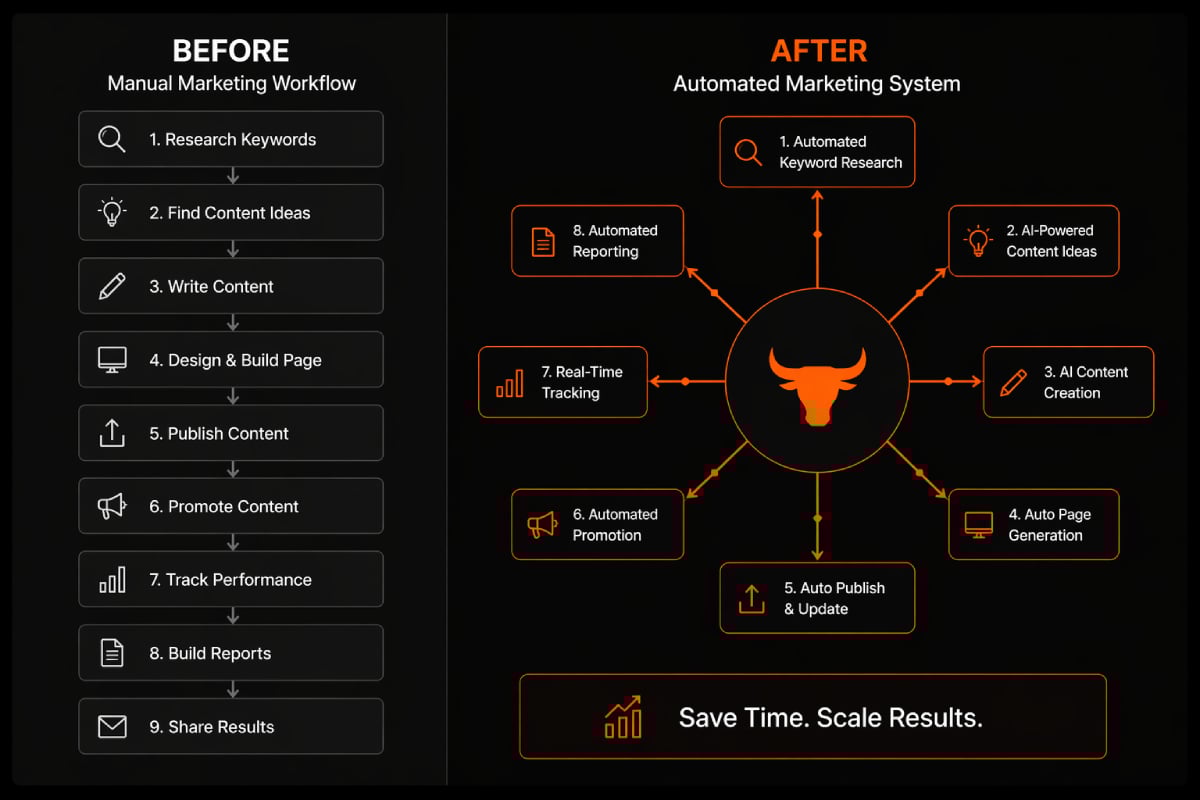
Marketing Engineering Example: Manual Work vs System-Based Marketing
It helps to see this role in action.
The Old Way
- Someone checks keyword rankings
- Someone finds new content ideas
- Someone writes the page
- Someone uploads the page
- Someone tracks results
- Someone reports on performance
That happens again and again.
The New Way
A marketing engineer builds a system that can:
- Pull keyword and search data automatically
- Identify content opportunities
- Help structure pages based on what is already ranking
- Send content into the right publishing workflow
- Track performance and surface insights
Now the team spends less time doing repetitive tasks and more time improving the strategy.
Marketing Engineer vs Other Marketing Roles
This is where people often get confused.
Marketing Engineer vs Marketer
A marketer runs campaigns.
A marketing engineer builds the systems that help campaigns run better and faster.
The marketer focuses on execution. The marketing engineer focuses on scalable execution.
Marketing Engineer vs Software Engineer
A software engineer builds software products or product features.
A marketing engineer uses technical skills to improve marketing performance.
The tools may overlap, but the goal is different.
Marketing Engineer vs Marketing Operations
Marketing operations keeps systems clean, organized, and working correctly.
Marketing engineering builds new systems, workflows, and automations that improve marketing outcomes.
Marketing ops is foundational. Marketing engineering is more focused on building new ways to operate and grow.
What Skills Does a Marketing Engineer Need?
A marketing engineer needs to understand both technical systems and marketing strategy.
Technical Skills
- APIs
- Automation tools
- CRM systems
- Basic coding like Python or SQL
- Data analysis
- Tracking and reporting setup
Marketing Skills
- SEO
- PPC and paid ads
- Landing page strategy
- Conversion rate optimization
- Email marketing
- Content strategy
Communication Skills
A great marketing engineer also needs to explain technical ideas in simple language.
That matters because business owners and marketing teams need clear answers, not jargon.
Why Marketing Engineers Matter More Now
This role is becoming more important because marketing has become more technical.
AI is a big reason why.
AI does not replace good marketing strategy. It does not replace good judgment either.
What it can replace is a lot of repetitive work.
But only if someone knows how to build the right system around it.
That is where marketing engineering stands out.
Most businesses are still using AI as a simple writing tool. Marketing engineers use AI as part of a larger workflow that connects research, execution, testing, and optimization.
Where Marketing Engineers Usually Come From
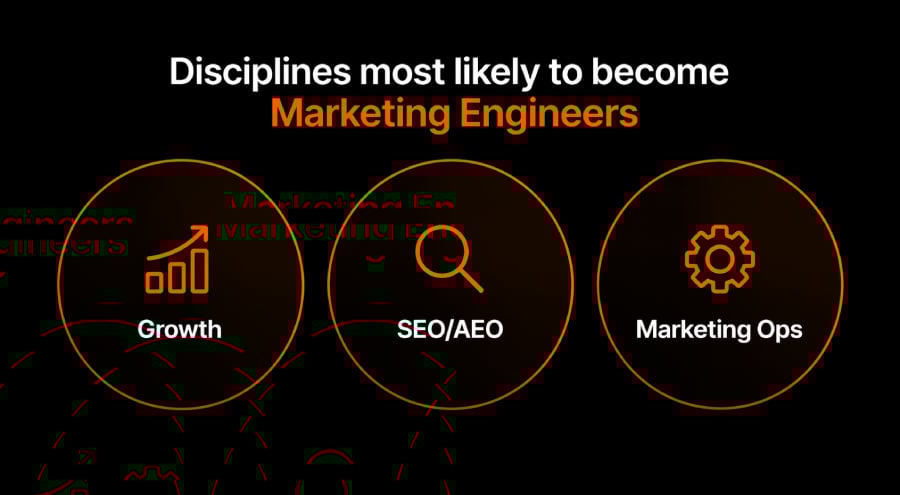
Most marketing engineers do not start as full-time engineers.
They usually come from fields like:
- SEO
- Growth marketing
- Paid media
- Marketing operations
- Technical content marketing
They start by learning how marketing works. Then they learn how to automate it, improve it, and connect the systems behind it.
Over time, they become much more valuable because they can both understand the goal and build the machine behind it.
What Marketing Engineering Means for Business Owners
If you own a business, this role matters because it helps you scale marketing without needing a huge in-house team.
That is especially important for small and mid-sized businesses, including home service companies, that need strong marketing but cannot justify hiring multiple specialists internally.
Option 1: Hire Internally
You try to find one person who understands:
- SEO
- Ads
- Landing pages
- AI
- Automation
- Reporting
- CRM systems
That person is hard to find. They are usually expensive. And if you hire the wrong person, it is costly.
Option 2: Use an Outsourced Marketing Engineer
This is where an agency can make more sense.
Instead of hiring a brand new internal role, you can work with a team that already understands how to build the systems, workflows, and strategy needed to improve your marketing.
That gives you:
- Lower risk
- Faster setup
- Broader expertise
- More affordability than building the role in-house
How Torro Media Acts as Your Marketing Engineer
At Torro Media, this is exactly how we think.
We do not just help businesses market themselves. We build better systems for how marketing gets done.
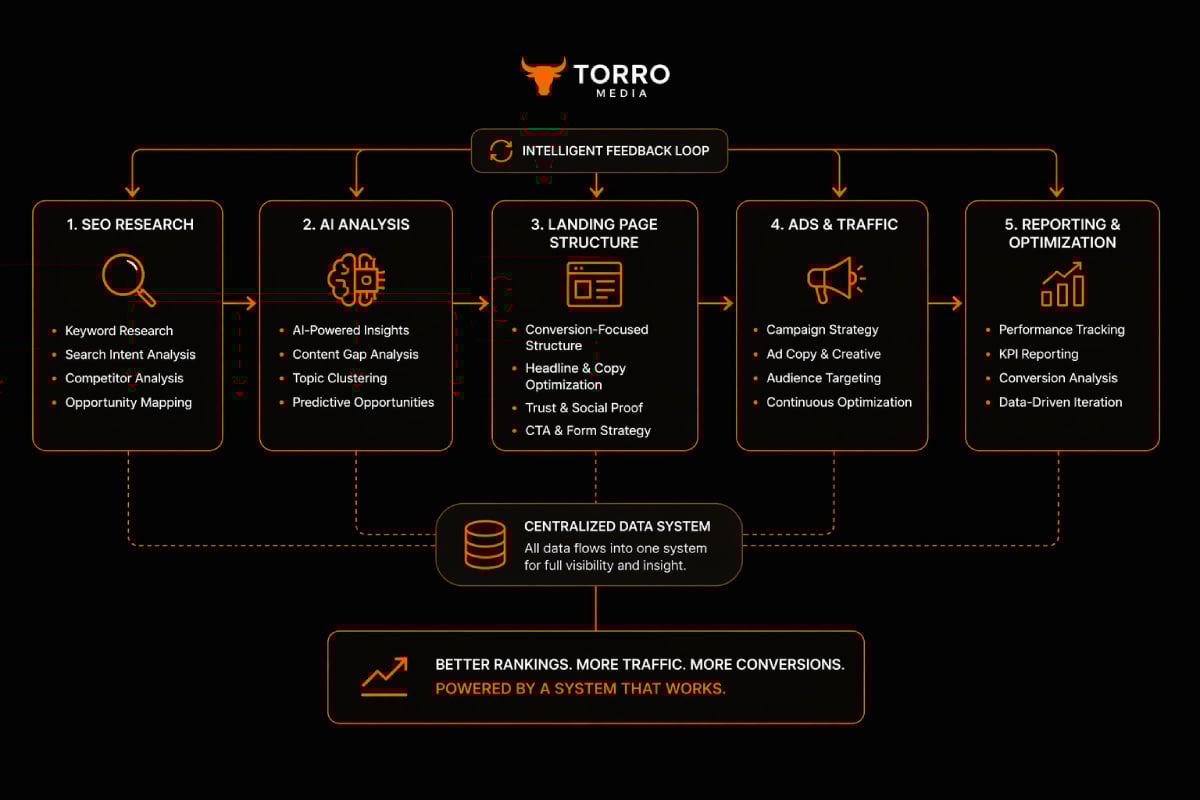
That includes using AI, automation, SEO data, CRO thinking, and real search behavior to improve output and performance.
What We Are Doing Right Now
We are already connecting AI into marketing systems in practical ways.
That includes work like:
- Using SEO research and deep research to find content opportunities
- Reverse engineering AI prompts and first-page Google results
- Structuring landing pages around conversion rate optimization
- Building ad messaging based on what is most likely to perform
- Creating better workflows between content, strategy, and reporting
That is marketing engineering in action.
It is not theory. It is not fluff. It is not just using AI because it sounds exciting.
It is building better systems so businesses can market smarter.
Why Outsourcing a Marketing Engineer Makes Sense
This role is still new. Most business owners should not rush to hire it internally.
That is because the job is broad, technical, and still evolving. Hiring one person for a role like this is hard enough. Hiring the right person is even harder.
That is why outsourcing can be the better move.
You Get a Team, Not Just One Hire
When you work with the right agency, you are not relying on one person to know everything. You get a team that understands SEO, paid media, websites, automation, content, data, and conversion strategy.
You Reduce Hiring Risk
Hiring internally for a new role is expensive and slow. Outsourcing gives you a faster way to test the impact without making a full internal commitment.
You Can Move Faster
A good outsourced team already has systems, workflows, experience, and tools. That means less trial and error and more forward progress.
Why Torro Media Is a Smarter First Step Than Hiring Internally
If you believe your business needs marketing engineering, the smartest move may not be to hire for it.
The smarter move may be to test it with a partner that already does it.
At Torro Media, we help businesses get the benefits of a marketing engineer without taking on the cost and risk of building that role in-house from day one.
And we make it easier to try.
- We do not lock businesses into long-term agreements
- Our contracts have a 90-day commitment
- You get to see how we work and what value we bring
If it works, great. You keep building.
If not, you are not stuck.
Final Answer: What Is Marketing Engineering?
Marketing engineering is the practice of building systems, automations, and technical workflows that help marketing perform better.
It sits between strategy and execution.
It helps businesses do more marketing without doing more manual work.
And as marketing keeps getting more complex, this role is only going to matter more.
If you are a business owner trying to grow without building a huge internal team, marketing engineering is worth understanding now.
And if you want an outsourced version of that role today, Torro Media can help you do it without the cost, delay, and risk of hiring internally.