Short answer: Yes. Or at least, it is replacing where discovery starts. People are searching for answers on Instagram, TikTok, and YouTube before they ever open Google. In many cases, the decision is already made by the time they do.
TLDR Key Summary
- Social platforms are now primary search engines
- Discovery starts in the feed, not the search bar
- People search in full questions, not keywords
- Structure and metadata decide whether content gets indexed
- On platform actions are ranking signals
- Social content influences AI results like ChatGPT and Perplexity
- If less than 10 percent of reach comes from search, content is not optimized
Social Platforms Are the New Search Engines
Most people still think SEO starts with Google. It does not. Discovery now starts on social platforms long before someone types anything into a browser.
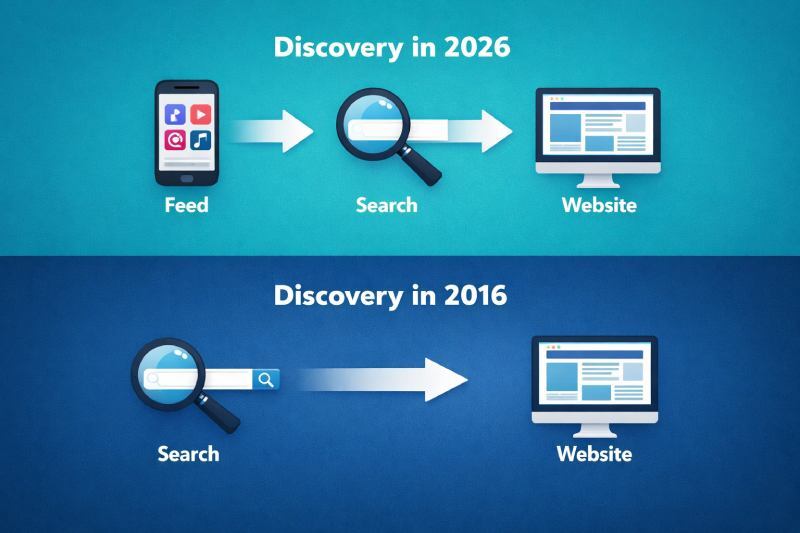
What the search volume numbers suggest
- Instagram processes about 6.5 billion searches per day
- YouTube processes about 3.5 billion searches per day
- For Gen Z, TikTok has overtaken Google for product questions and how to searches
Why video changed the starting point of search
People do not want to read first. They want to see. When someone wants to learn a skill, check a review, or understand how something works, they go straight to video.
What this means for SEO in 2026
Social platforms are not just where content lives. They are where search begins. If your content is not structured and searchable on these platforms, competitors capture demand before you even appear.
Which Social Platforms Matter Most for Search
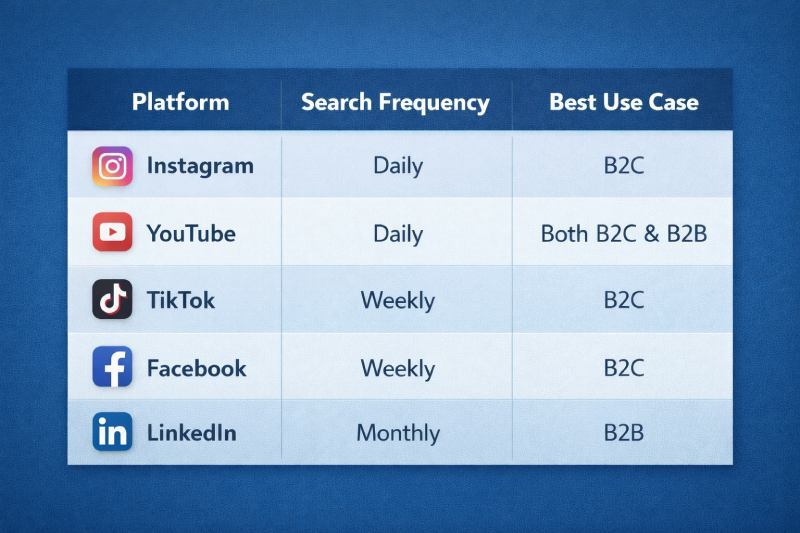
Not every platform behaves the same way. Search frequency matters because it tells you where to focus first.
Search frequency by platform
- Instagram & YouTube: Daily search behavior
- TikTok & Facebook: Weekly search behavior
- LinkedIn: Monthly search behavior
If you are B2C
Prioritize Instagram and YouTube. That is where people search daily and where discovery decisions form quickly.
If you are B2B
Prioritize YouTube and LinkedIn. Expect LinkedIn to take longer. Searchers are less frequent, so consistency matters more than bursts.
Match platform to demographics
- Younger audiences search more on TikTok and Instagram
- Older audiences rely more on YouTube and Facebook
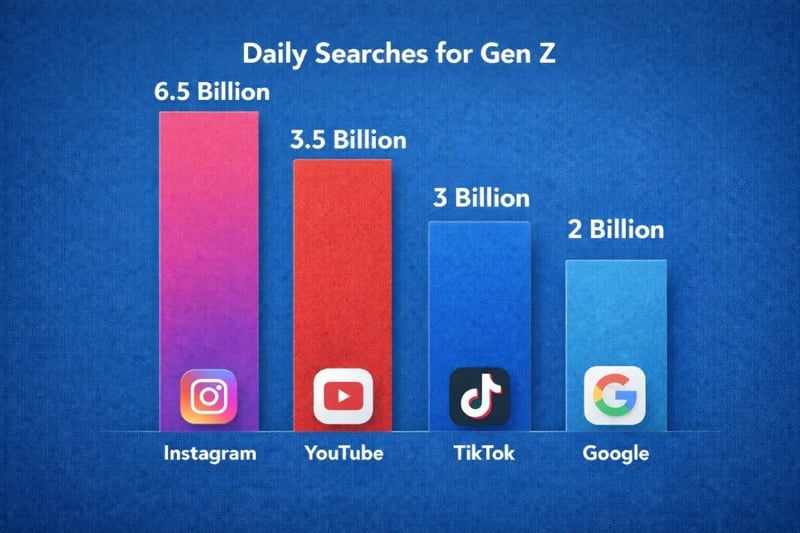
Discovery Starts in the Feed, Not the Search Bar
Traditional SEO assumes intent comes first. In 2026, algorithms surface solutions before intent forms.
How discovery actually happens
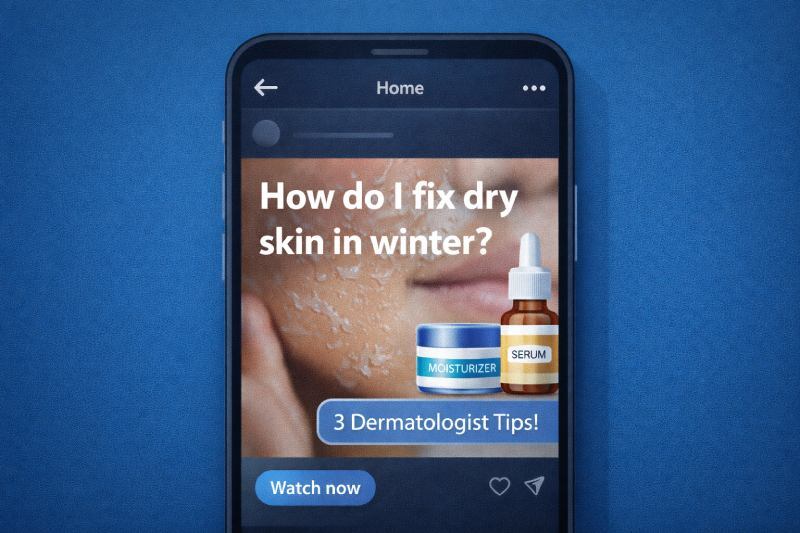
You scroll. A creator shows a tool. A quick demo solves a problem you did not realize you had. That moment is discovery, and it often happens before a search.
The biggest shift for marketers
By the time someone opens Google, choices are already shaped. In many cases, the decision is already made. You do not win in the search bar anymore. You win inside the feed.
How to win inside the feed
- Deliver clarity in the first few seconds
- Show the outcome first
- Use question-based hooks that mirror how people speak
- Use on-screen text that matches what people type
How People Really Search on Social Media in 2026
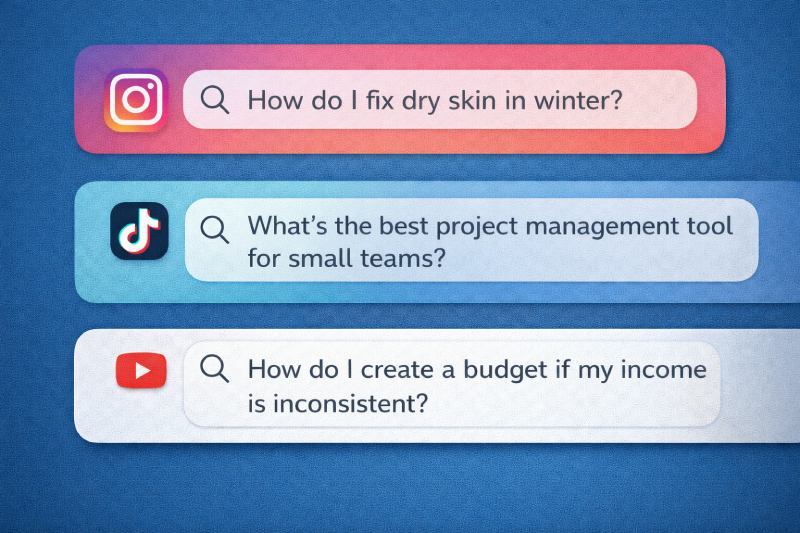
People use social like search engines now, but they do not search with keywords. They search with full questions and real situations.
People search in sentences, not keywords
- How do I fix dry skin in winter?
- What is the best project management tool for small teams?
- How do I create a budget if my income is inconsistent?
How platforms interpret your content
- TikTok surfaces trending search questions inside creator dashboards
- Instagram matches posts based on phrasing in captions and on-screen text
- YouTube indexes spoken words and maps them to user questions
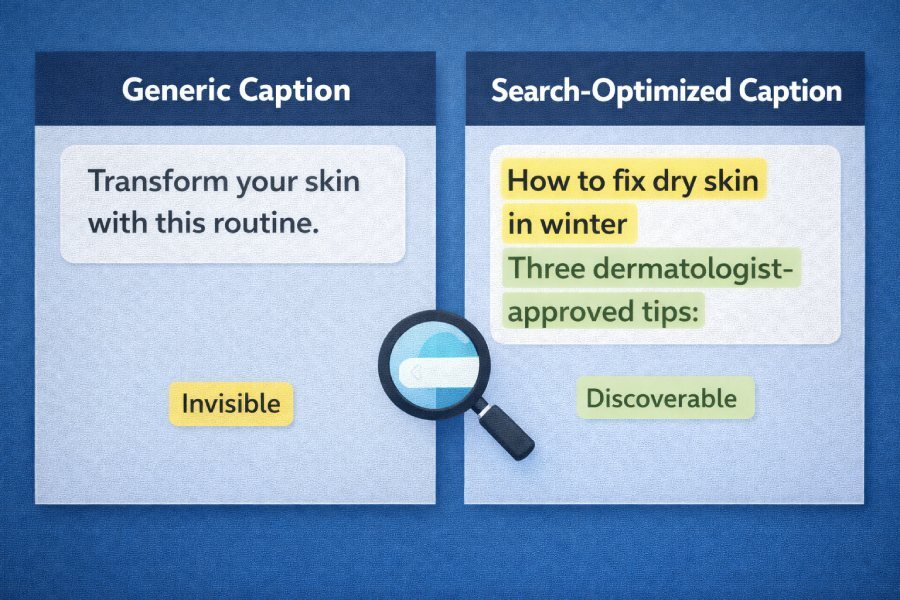
Generic vs search-optimized captions
Generic caption: Transform your skin with this routine
Search-optimized caption: How to fix dry skin in winter. Three dermatologist-approved tips.
How to find the exact questions people ask
- Use AnswerThePublic to pull real question phrasing
- Use Ubersuggest to identify gaps and opportunities
- Turn each question into a short video that answers it directly
Structure and Metadata Decide Whether You Get Indexed
Great content alone is not enough. Algorithms cannot rank what they cannot understand.
How platforms skim content
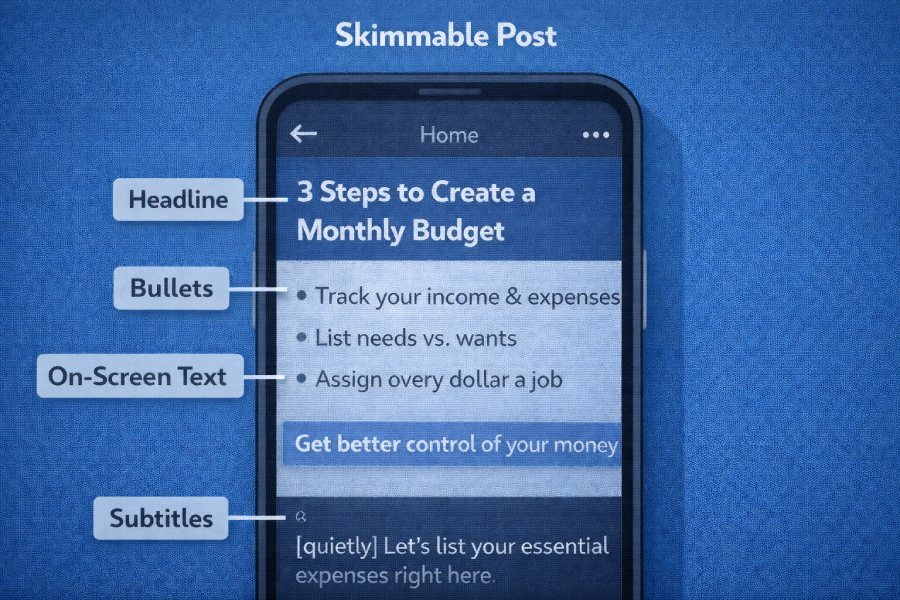
Social platforms now skim content the way humans skim a web page. They look for headlines, sections, and key phrases in captions, on-screen text, and spoken words.
What makes social content indexable
- Clear headline in the first line of caption
- Short sections or bullets that are easy to skim
- On-screen text that repeats the core phrase
- Subtitles so spoken words are readable and indexable
- Natural language captions that mirror how people search
What to avoid
- Vague captions with no topic
- Clever wording that does not match search phrasing
- No on-screen text reinforcing the topic
- No subtitles
On Platform Actions Are Now Ranking Signals
Social media is not just top of funnel anymore. Platforms reward content that keeps users inside the app.
Why platforms reward on platform conversions
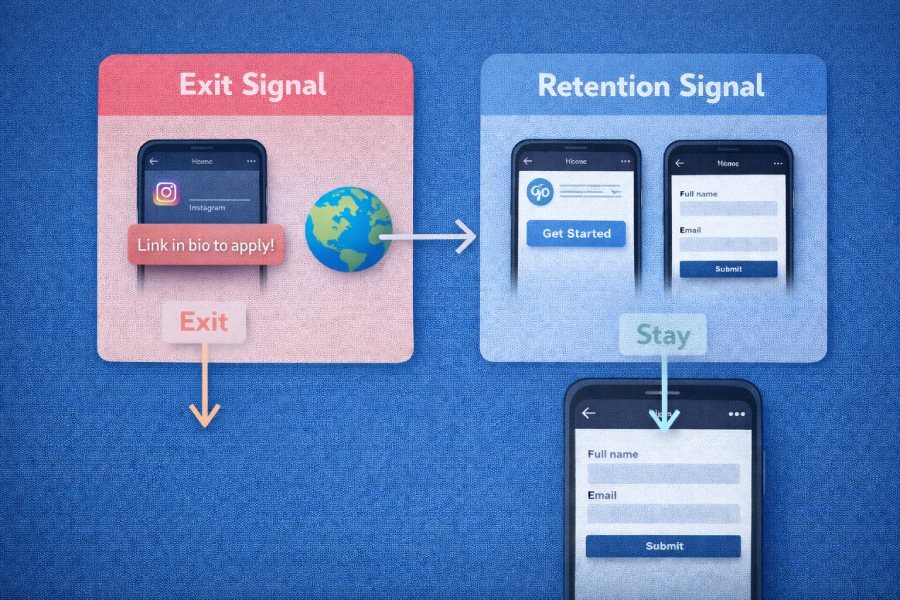
Platforms make money when users stay. Sending people off platform is an exit signal. Native actions are retention signals, and retention gets rewarded.
Examples of on platform ranking signals
- Instagram boosts posts that use native checkout
- TikTok rewards purchases through TikTok Shop
- YouTube pushes product tagging and integrated shopping
How to use this to increase reach
- Enable native checkout and tag products so users can buy without leaving the app.
- Use DMs as landing pages using tools like ManyChat to auto-send links or guides.
- Use native lead forms on Instagram and Facebook to capture leads on platform.
The behavior shift you need to accept
Click link in bio means reach drops. Tap product tag and buy means reach increases.
Social Media SEO Also Influences AI Search Results
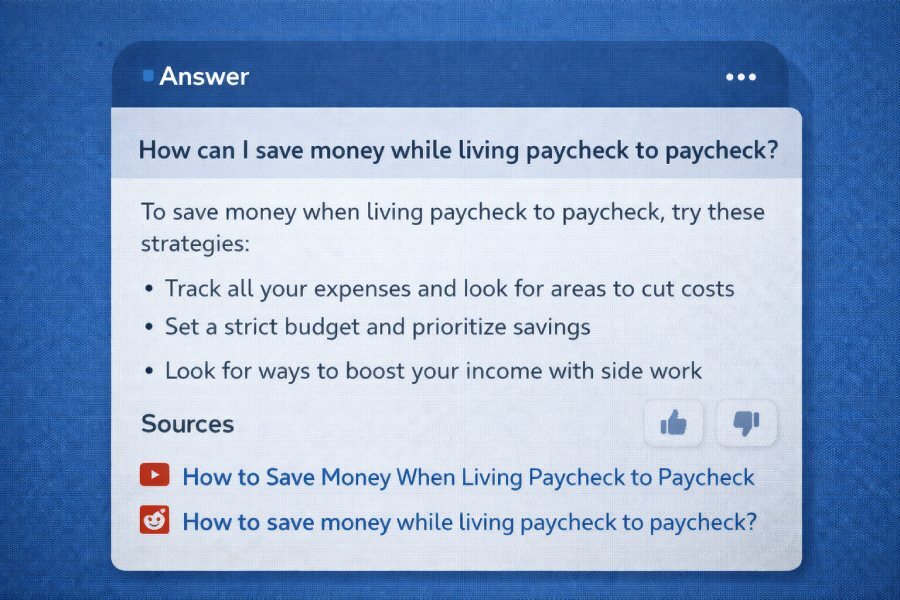
Your social content does not just affect social platforms. AI systems pull from social platforms to answer questions.
Where AI systems pull recommendations from
- YouTube reviews
- Reddit threads
- Quora discussions
- Other social proof sources that explain problems clearly
Why clicks are no longer the full story
People discover brands through AI and social, form opinions, and decide before clicking. By the time they visit your website, they are already sold.
What to Measure for Social Media SEO
Views and likes are not the point. Discovery is. Measure whether people are finding you through search and whether discovery leads to outcomes.
Measure 1: Reach from search
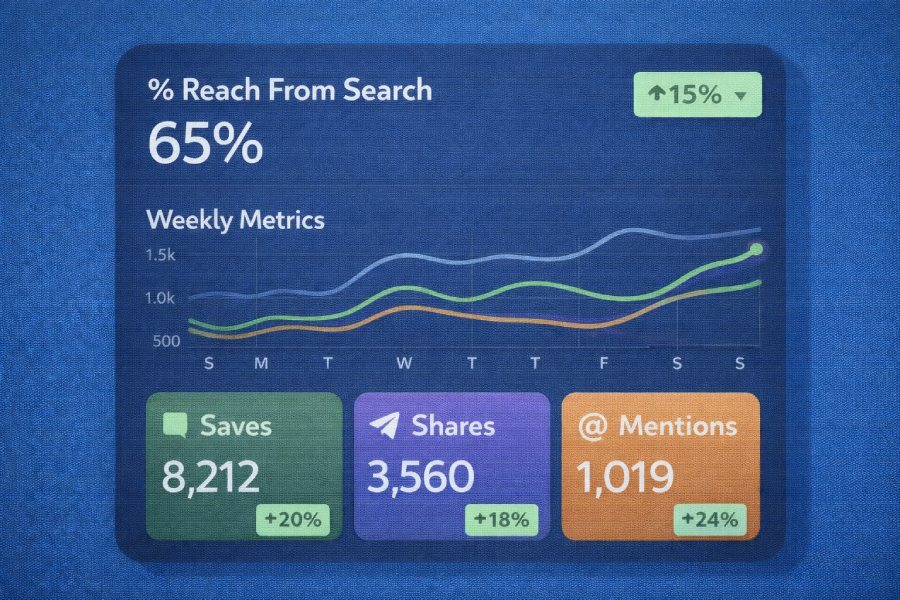
Instagram, TikTok, and YouTube show how much reach came from search. If less than 10 percent of your reach comes from search, your content is not search optimized yet.
Measure 2: Saves and shares
Saves signal lasting value. Shares signal problem solving and social proof. Both increase visibility in feeds and search results.
Measure 3: Brand mentions and questions
Track where your brand shows up in comments, Reddit threads, and even AI conversations. If your brand appears in AI answers, it is a signal your content is working beyond the platform.
Measure 4: Search opportunity research
- Use AnswerThePublic to identify question phrasing
- Use Ubersuggest to compare volume and find gaps
- Build content around questions with clear outcomes
The Takeaway: Social Media SEO Is Already Here
Social media SEO is not coming. It is already here. Discovery starts in the feed. Search happens in sentences. Structure determines whether content gets indexed. Retention drives reach. AI pulls from everything.
What to do next
- Pick the platforms where your audience actually searches
- Turn real questions into videos that answer them fast
- Use skimmable structure: headline, bullets, subtitles, and on-screen text
- Prioritize on platform actions when possible
- Measure search reach, saves, shares, and mentions